Sales Controlling: Definition, Tasks, and Tools

Sales controlling is the systematic planning, management, and monitoring of all sales activities with the goal of achieving revenue targets in a measurable way. The discipline relies on KPIs such as forecast accuracy, win rate, and sales cycle length. Modern sales controlling combines traditional tools with conversation data from CRM and revenue intelligence software.
Sales Controlling: The Essentials
- Sales controlling encompasses the planning, management, and monitoring of all sales activities with the goal of achieving revenue targets in a reproducible way.
- The most important KPIs are forecast accuracy, win rate, sales cycle length, and customer acquisition cost.
- According to SiriusDecisions (Forrester), 79% of sales organizations miss their forecast by more than 10%, usually due to subjective data assessments.
- Kickscale automates CRM maintenance, deal health assessment, and forecasting based on actual customer conversations—GDPR-compliant and hosted in the EU.
What is sales controlling?
Sales controlling is a sub-discipline of business controlling that focuses on planning, managing, and monitoring the sales process. You can use it to objectively evaluate revenue targets, costs, and sales performance based on key metrics.
Strategic sales controlling focuses on long-term decisions such as market positioning and resource planning. Operational sales controlling manages day-to-day operations through pipeline reviews, forecasting, and deal coaching. Both levels are interconnected, as strategic goals require operational data as a foundation. The proximity to sales management is significant: sales management handles team building and leadership, while sales controlling provides the data foundation for these efforts.
What are the tasks of sales controlling?
Sales controlling handles planning, KPI analysis, management, and forecasting. Each task is built on reliable data from CRM and sales conversations.
- Sales planning: defines revenue targets, budgets, and resource allocation for quarters and regions.
- KPI analysis: evaluates metrics such as win rate and contribution margin to uncover weaknesses.
- Sales management: uses pipeline reviews and sales reporting to coach sales staff based on objective data.
- Forecasting: generates revenue projections based on historical data and current sales forecast signals.
Which KPIs are critical in sales controlling?
The most important KPIs in sales controlling measure pipeline quality, sales efficiency, and cost structure.
Comprehensive sales analytics makes these KPIs accessible and actionable for the team.
Which tools are used in sales controlling?
Traditional tools like ABC analysis and benchmarking provide a baseline for sales controlling. The most effective tools are those that translate conversation data directly into CRM metrics.
Traditional analysis tools
ABC analysis categorizes customers by revenue contribution, benchmarking compares your sales performance against competitors, and SWOT analyses assess opportunities and risks. These tools provide a solid foundation but remain dependent on manually maintained data.
AI-powered tools: Revenue Intelligence and Deal Health
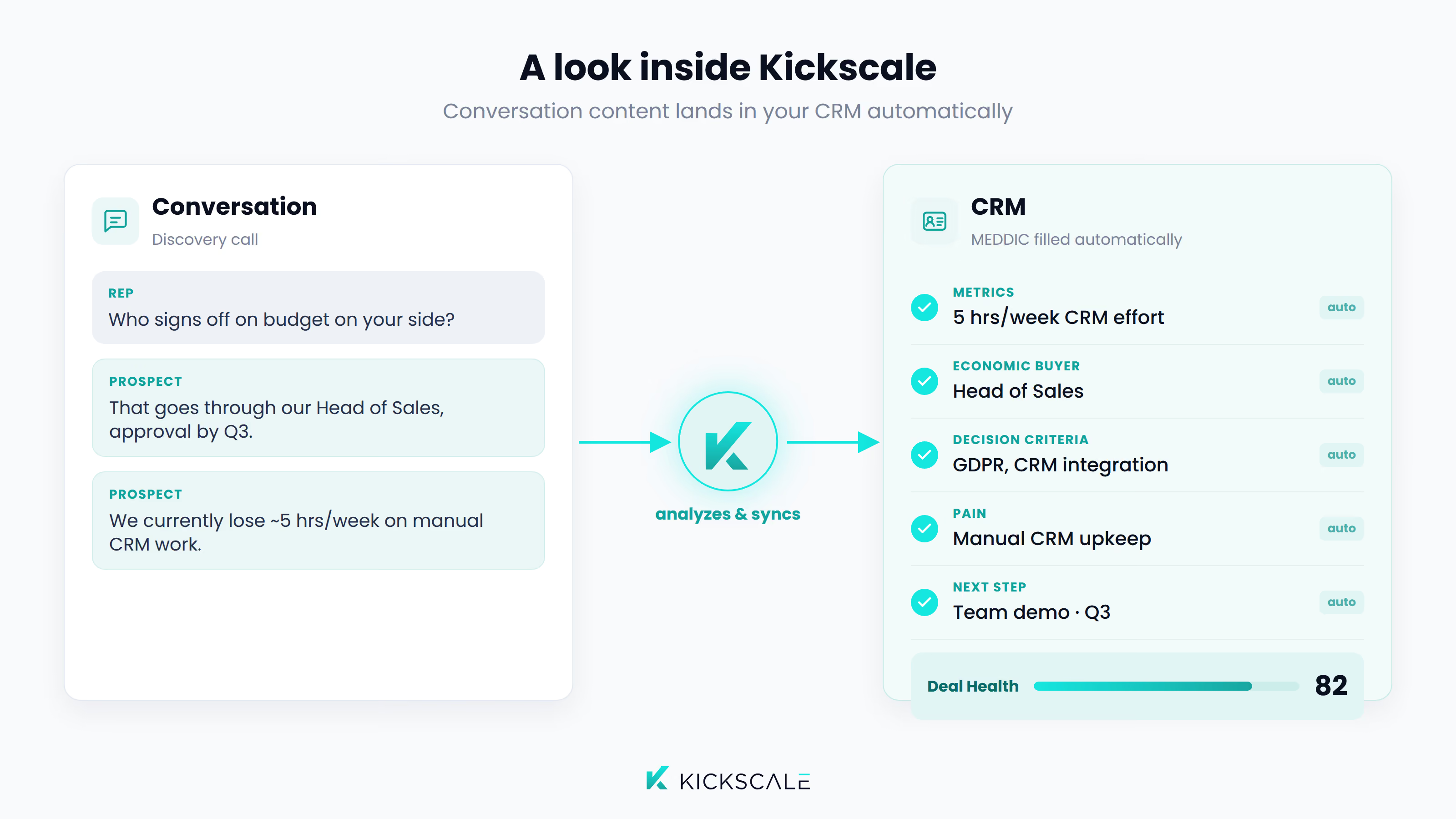
Kickscale automatically analyzes customer conversations and transfers qualification signals, such as MEDDIC or BANT criteria, directly into the appropriate CRM fields. These signals generate a deal health score that highlights which deals need attention before the forecast slips. This combination of Revenue Operations and actual conversation data is where traditional sales controlling reaches its limits.
How do I introduce sales controlling to my team?
To implement sales controlling, start by defining your key performance indicators, consolidating all data sources, establishing a reporting rhythm, and assigning clear responsibilities within your team.
- Define KPIs: Select three to five core metrics that align with your sales cycle, such as forecast accuracy and win rate.
- Unify data sources: Connect your CRM, calendar, and conversation data into a single system instead of manually gathering numbers from multiple tools.
- Establish a reporting rhythm: Set up weekly pipeline reviews and monthly forecast meetings.
- Clarify responsibilities: Determine who analyzes the metrics and who is responsible for correcting discrepancies.
How are marketing and sales controlling related?
Your marketing team delivers the leads, and sales controlling then evaluates how well they convert. Both departments need a shared set of metrics to accurately distinguish between Marketing Qualified Leads and Sales Qualified Leads.
If this common foundation is missing, friction is inevitable: Marketing reports full funnels, while Sales reports empty pipelines. A shared metric system for lead quality, conversion rates, and cost per lead bridges this gap.
Make sales controlling the foundation for reliable forecasts
Sales controlling provides the metric-based foundation you need to proactively identify upcoming pipeline lulls and stabilize forecasts, rather than relying on subjective assessments.
The greatest leverage comes from combining traditional instruments, such as KPI systems, with automated CRM maintenance and conversation analysis. This closes the gap between what is said in customer meetings and what actually ends up in your CRM.
Your benefits with Kickscale:
- You see deal health scores based on actual conversation data rather than subjective estimates.
- You save time by eliminating manual CRM updates after every customer call.
- You identify forecast risks earlier because qualification gaps are flagged automatically.
- You maintain control over your data because Kickscale is hosted in the EU and is GDPR-compliant.
Sales Controlling – Frequently Asked Questions
What is the difference between sales controlling and sales management?

Sales controlling provides the metric-based foundation, while sales management uses that data to make personnel and strategic decisions. Both areas work closely together, as leadership decisions are rarely accurate without reliable data.
This is some text inside of a div block.
How often should you analyze sales metrics?
Review operational metrics, such as pipeline status, weekly, and strategic metrics, such as forecast accuracy, monthly or quarterly. More frequent reviews are worthwhile for short sales cycles of under 30 days.
This is some text inside of a div block.
Which software is suitable for sales controlling?
In addition to your CRM, tools that automatically analyze conversation data and translate it into metrics are helpful. Kickscale handles this step by transferring qualification signals directly from customer conversations into your CRM.
This is some text inside of a div block.
Can you implement sales controlling without a dedicated controlling department?
Yes, smaller teams often handle this task directly within the sales leader's role profile. What matters is a consistent KPI routine, not the size of the department.
This is some text inside of a div block.
How do you know if your forecast is unreliable?
A warning sign is a recurring variance of more than 10% between projected and actual revenue. Additionally, a high proportion of estimated rather than recorded values points to weaknesses.
This is some text inside of a div block.
How does Kickscale support the implementation of sales controlling?
Kickscale automatically captures customer conversations, transfers structured data into your CRM, and provides real-time deal health scores. Setup takes just a few hours and requires no IT project.
This is some text inside of a div block.
This is some text inside of a div block.
Markus is the co-founder and CMO of the Vienna-based scaleup Kickscale, which develops AI-powered revenue intelligence technology for European sales teams. Before founding Kickscale, Markus started as one of the first SDRs at Bitmovin and rose to become Head of Global Digital Marketing, where he played a key role in establishing the video streaming company as a global market leader.




Your sales team deserves clarity instead of guessing games
With our AI revenue intelligence platform, we help innovative sales teams make better decisions and close more deals.
Data-driven better pipeline decisions.
Latest articles for sales leaders who want to improve the quality of their CRM data, forecasts, and revenue operations.


Your sales team deserves clarity instead of guessing games
With our AI revenue intelligence platform, we help innovative sales teams make better decisions and close more deals. Experience the difference:

Deep customer understanding
Identify why customers buy or what prevents them from doing so – from all conversations

Objective forecasts
Finally make decisions based on hard facts instead of gut feeling

Deal prioritization
Focus your team on the opportunities with the highest potential