Sales forecast: How to achieve maximum planning security through objective data


A sales forecast is a reliable forecast of which deals your sales team will close in a specific period of time (month or quarter). Based on the results, you can plan investments and secure your growth goals.
Sales Forecast: The most important facts in brief
- The core task of the sales forecast: A sales forecast forecasts the actual financial statements over a period of time in order to plan investments and growth based on real data.
- “Dirty Data” error source: Most forecasts fail due to subjective assessments by employees and incomplete CRM maintenance.
- Objective database: Modern systems (revenue intelligence) capture facts directly from video calls and emails, instead of relying on manual notes.
- automation: Linking Zoom or MS Teams to your CRM (e.g. HubSpot or Salesforce) ensures a real-time forecast.
- Deal-Health: Instead of using flat percentages, AI uses measurable signals such as customer interaction and decision maker participation to calculate the probability of closing.
- The goal: A forecast accuracy of over 95%, which gives you full planning security for your scaling.
Why are my sales forecasts inaccurate?
Sales forecasts are inaccurate when they are based on the subjective assessments of your salespeople and are supported by incomplete data in CRM. One However, a useful forecast requires reliable facts from customer interactions to calculate the actual probability of closing without personal bias.
The problem of personal sales forecasts
When your sales reps manually rate their deals, personal experience and different interpretations of the conversation flow into the forecast.
Since there is no uniform data basis for evaluation, the quality of the forecast varies depending on the employee. As a result, revenue planning is more of a collection of estimates than a statistically reliable forecast.
Wrong sales forecasts due to data gaps in CRM
A sales forecast suffers from incomplete data maintenance in the CRM system. Too often, important details from sales talks, such as objections or details on budget approval, are not documented in good time or only selectively.
These information deficiencies mean that deals are continued in the system that, objectively speaking, already have a high risk of loss.
Dirty data leads to incorrect forecasts
Outdated or incorrect records (Dirty Data) distort the overall picture of the sales pipeline. If closing data is not updated or deals are being conducted in the wrong phases, the forecast shows a sales volume that does not really exist.
For company management, this means that resources are being planned for projects that have no actual prospect of success.
How can I increase the accuracy of my sales forecasts?
You increase the accuracy of your sales forecasts by primarily replacing the manual reworking of your sales calls with automations and using objective data for evaluation.
Only when the actual content of your calls flows directly into the forecast without human distortion is there a reliable basis for decision-making.
Accurate sales forecasts through conversation intelligence
The most accurate data for a forecast comes directly from sales calls. By using AI analysis tools, the budgets, timelines and decision makers discussed there are automatically extracted.
This approach ensures that only content that has actually been discussed forms the basis for the sales forecast, which massively reduces the error rate due to forgotten or misinterpreted details.

Automated CRM synchronization for up-to-date data
A forecast can only be as current as the status in your CRM. By automatically synchronizing conversation and email analyses with CRM, you can bring everything up to date.
Sales forecast software recognizes progress in the sales process in real time and immediately adjusts the probabilities in the forecast. This prevents outdated information from distorting planning for the coming quarter.
Using objective health values for deals
Instead of relying on the information provided by your sales reps, robust forecast models use values to health express a deal. These scores are calculated from measurable factors such as:
- Interaction frequency: How often does an exchange take place with the customer?
- People involved: Are the relevant decision makers involved in the process?
- Topic relevance: Have important topics such as implementation or budget approval already been discussed in concrete terms?
These metrics enable a forecast that is based on the actual behavior of your (potential) buyer and is therefore significantly more reliable than classic estimates.
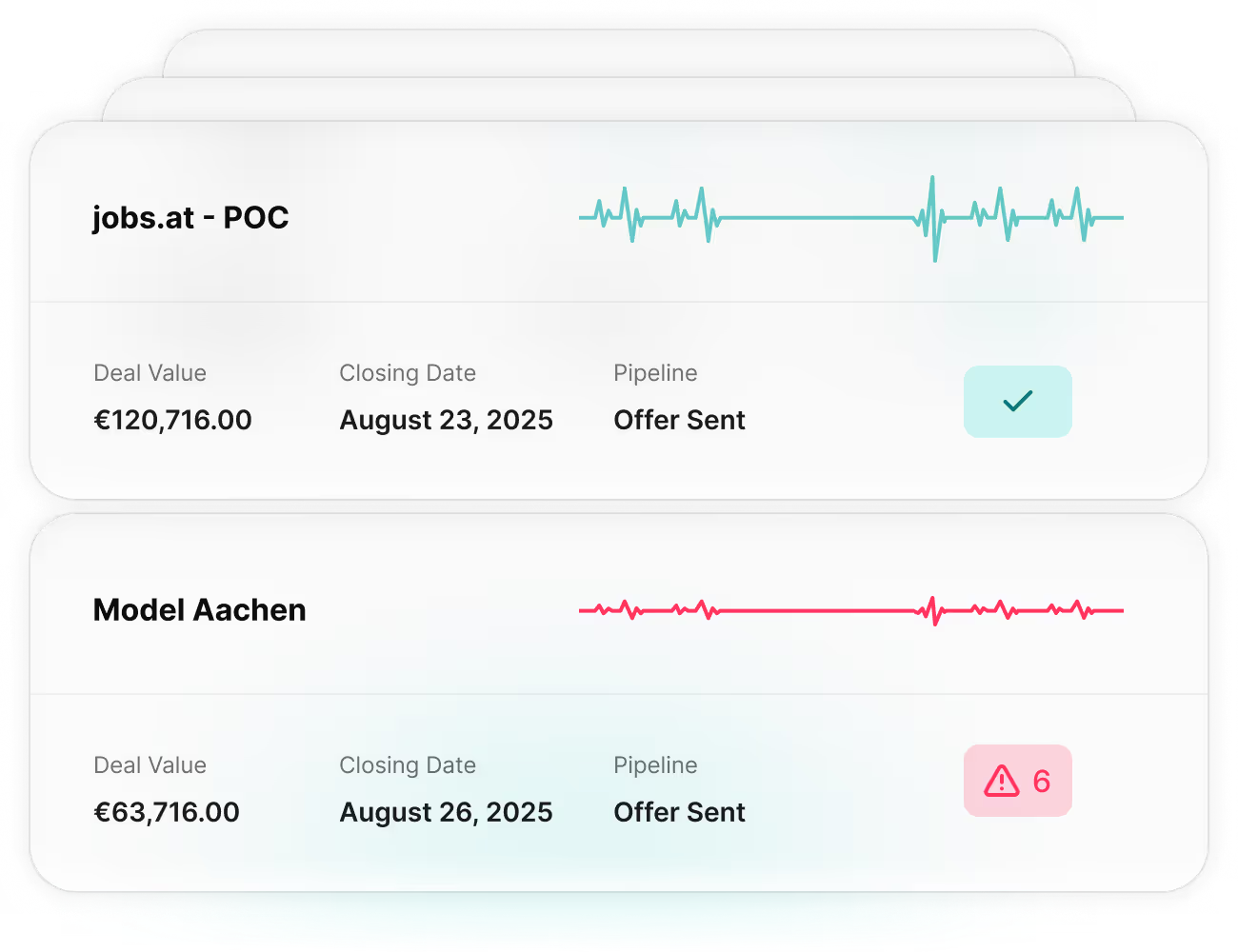
Evaluate the health of your deals objectively
Get a Deal Health Score for every deal — based on AI analysis of all conversations. The traffic-light visualization instantly shows you which deals are on track and which are at risk. With clear reasoning on where to take action.
"Thanks to the Deal Health Score, we were able to identify at-risk deals early and intervene specifically. This improved our forecast accuracy by 35% and saved many deals we would have otherwise lost."
Upgrade for sales forecast methods: Revenue intelligence with AI
The key difference is that classic forecast methods are based on past values and estimates, but AI revenue intelligence models use real-time data from ongoing customer interactions to predict future sales.
Static forecast models vs. dynamic analysis
Traditional approaches usually still use the so-called “weighted pipeline” method, in which the deal volume is simply multiplied by a flat percentage chance of the respective phase.
AI Revenue Intelligence However analyses the dynamics within the deal. Based on hundreds of data points, it recognizes whether your sales process is stagnating or whether new signals in a conversation increase the probability of closing. This is done at any time, regardless of which formal CRM phase the deal is in.
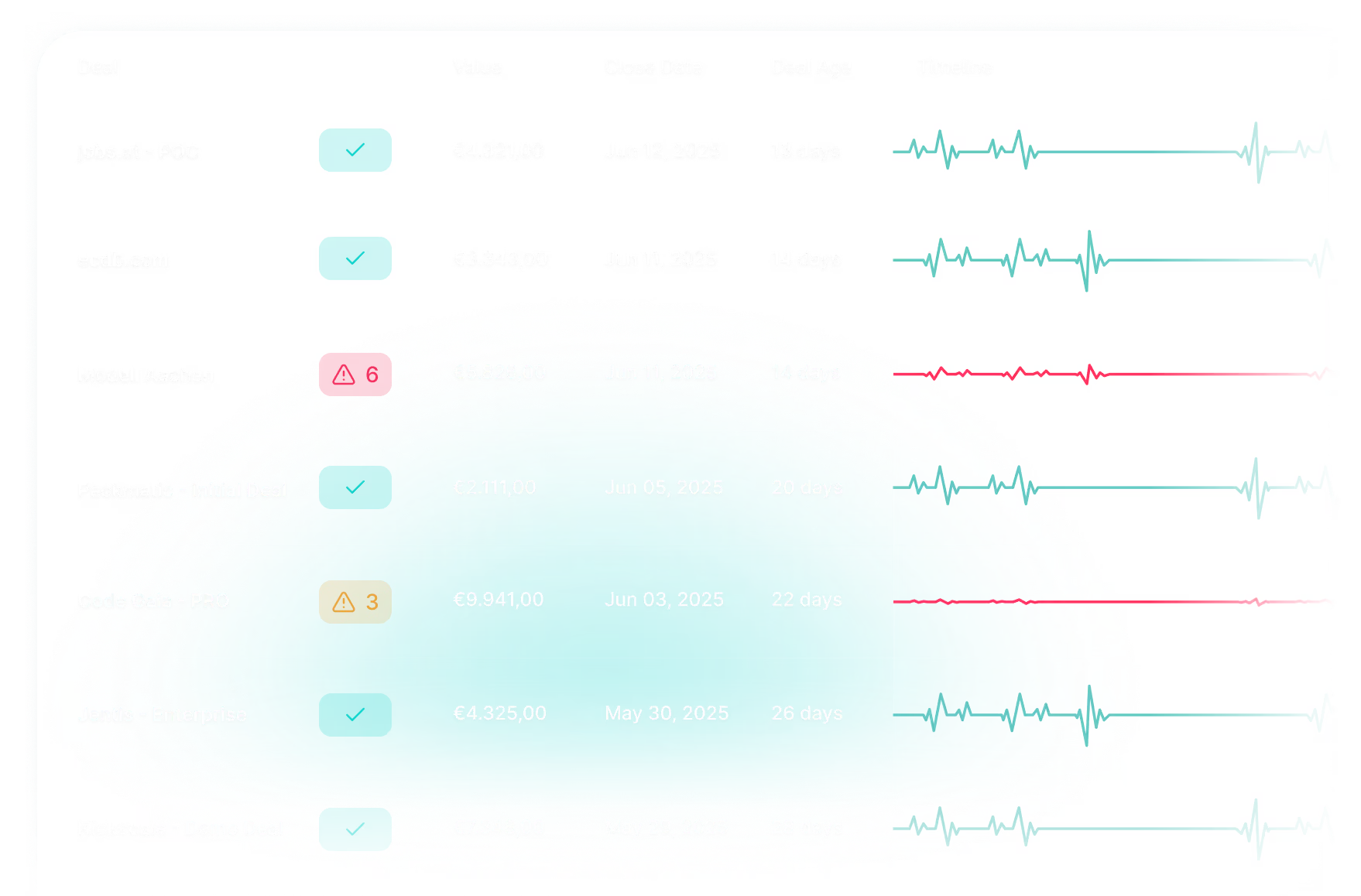
Manual vs. automated documentation
With conventional methods, you depend on your sales representatives correctly interpreting all information and then reliably storing it in CRM. This human filter will invariably result in loss of information.
AI revenue intelligence, on the other hand, works directly at the source: The AI records all interactions with the lead and generates structured, actionable insights from them. This gives you an evaluation that is not distorted by the subjective perception of those involved.
The shift from forecast to recommended action
Classic sales forecasts only provide you with a number at the end of a table. A Revenue Intelligence Tool Among other things, calculates whether a deal is at risk and also identifies the reason, such as the lack of contact with management level.
How do I use an AI sales forecast in my team?
In Kickscale Access the AI sales forecast by connecting Microsoft Teams, Zoom, or Google Meet. The analysis results are fed back directly to your CRM such as HubSpot or Salesforce.
Thanks to pre-configuration and native integrations, this process is ready to use within minutes without you having to program yourself.
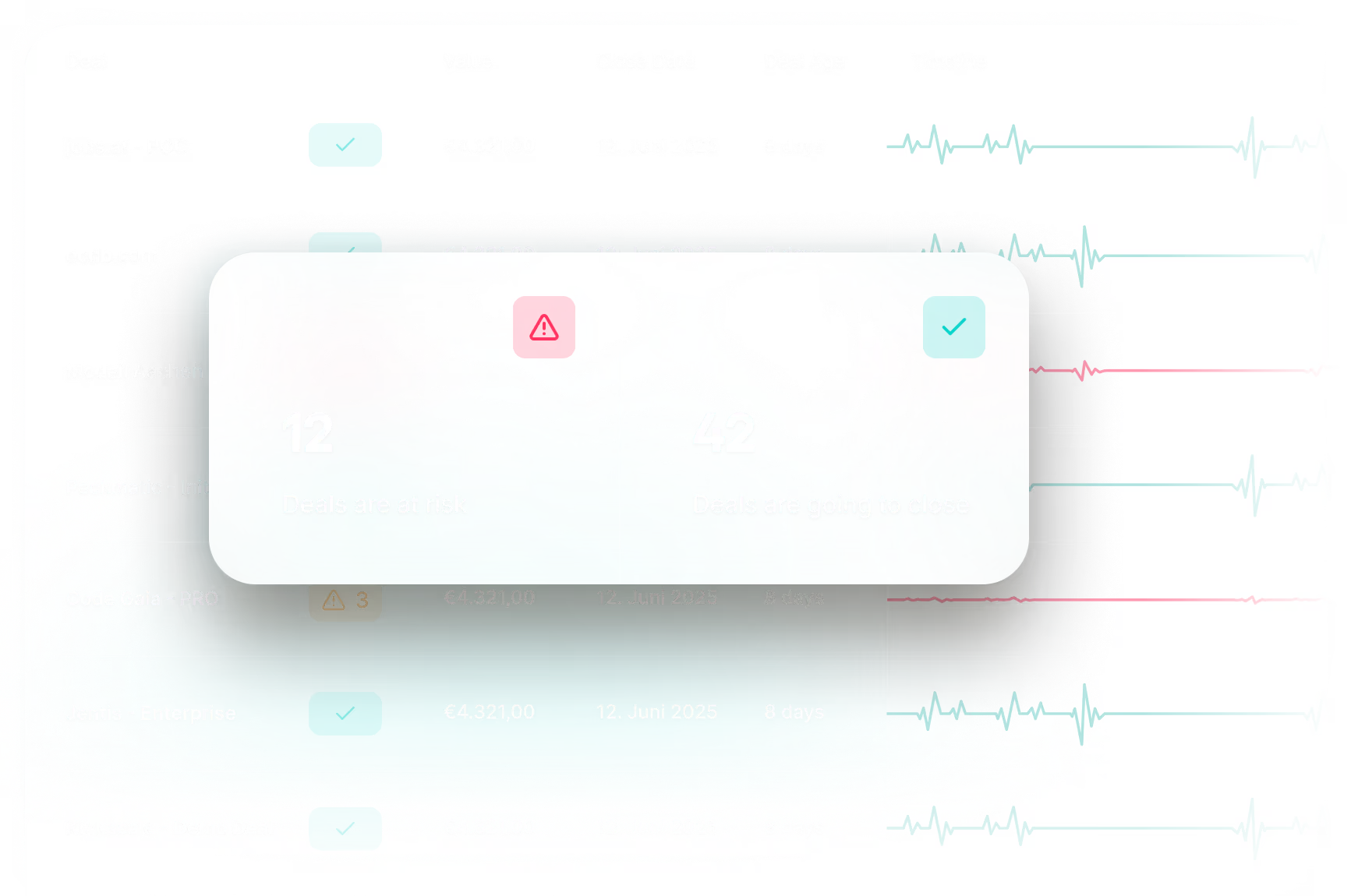
Kickscale automatically captures your customer meeting conversations. The content is analyzed and translated into insights about deals, customers, and market trends.
With Kickscale's AI, your sales forecasts are based on real conversations — showing you which deals will close, when, and with what probability.
AI Forecasting in Kickscale
Connect your existing tools
The first step is to connect Kickscale to the tools your team is already using: Google or Outlook calendars, Zoom, Microsoft Teams, or Google Meet. Here you can find them all Integration options.
As soon as the link is established, the AI notetaker automatically takes part in your appointments. You don't have to learn a new software interface for your conversations; the data is captured invisibly in the background.

Using prefabricated frameworks
You can determine for yourself which signals are decisive and important for a deal. But you don't have to take this step alone, because Kickscale offers you proven frameworks such as BANT (Budget, Authority, Need, Timeline) or MEDDIC already preconfigured.
From minute one, the AI therefore knows what to pay attention to. It automatically recognizes whether the customer has talked about a budget, for example, or whether the person with decision-making authority was in the meeting.
You can adjust these settings to suit the intricacies of your industry, but always start with a tried and tested model.

Step 3: Automated reconciliation with your CRM
The most time-consuming part, i.e. manually typing out notes in Salesforce, HubSpot, Pipedrive or MS Dynamics, is completely omitted. Kickscale identifies the key facts of a conversation and writes them directly into the appropriate fields of your CRM.
For example, if the AI recognizes during a conversation that the customer is planning to start the project for August 1, the “Close Date” field in your Pipeline updated automatically. Your forecast therefore remains accurate in real time without any action on your part.
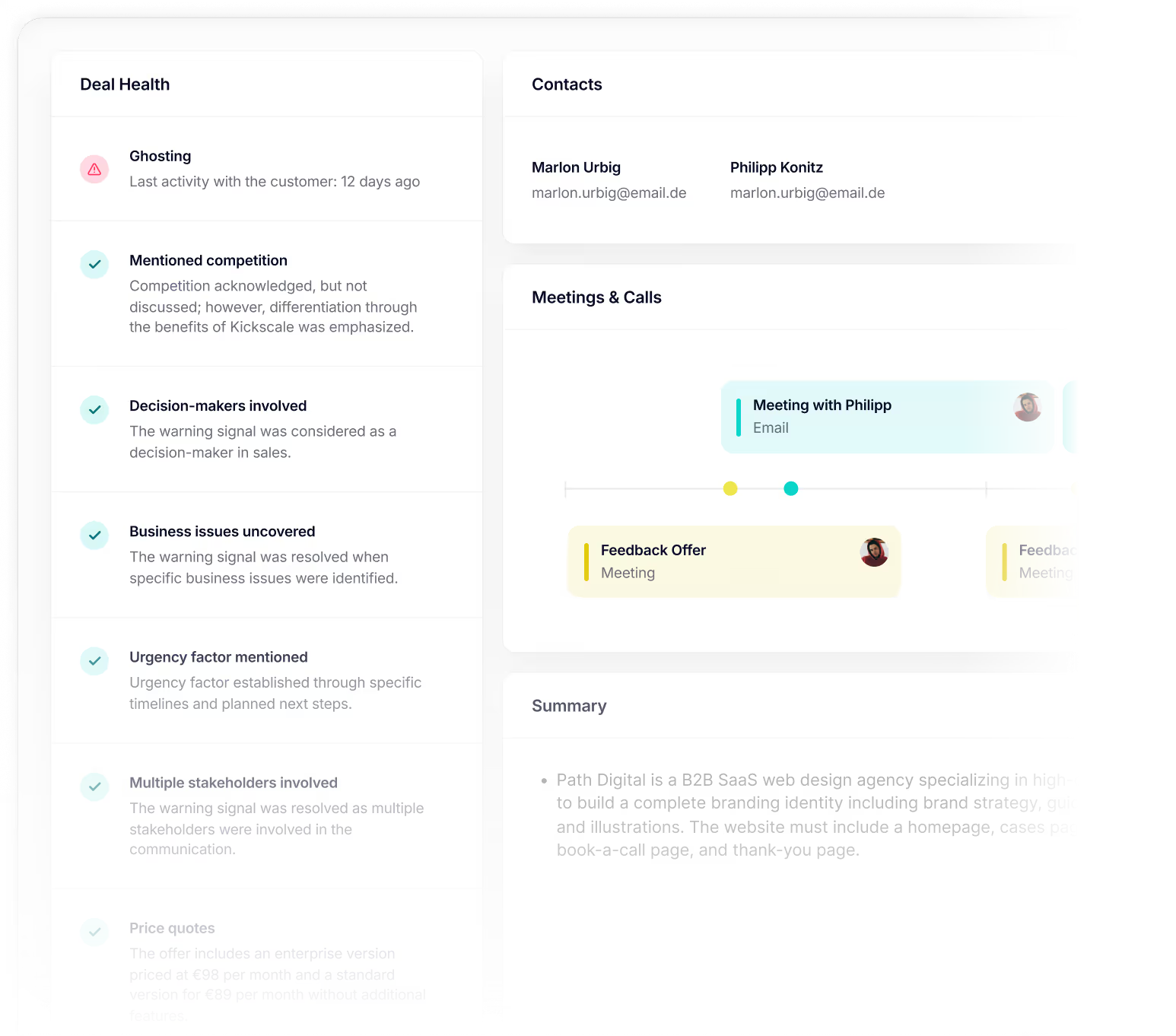
Step 4: Optimization through data-based comparison
Once set up, you can instantly compare the accuracy of your forecasts. Traditional forecasts often show deviations of 20% to 30% from the actual quarterly result, but kickscale users significantly reduce this error rate.
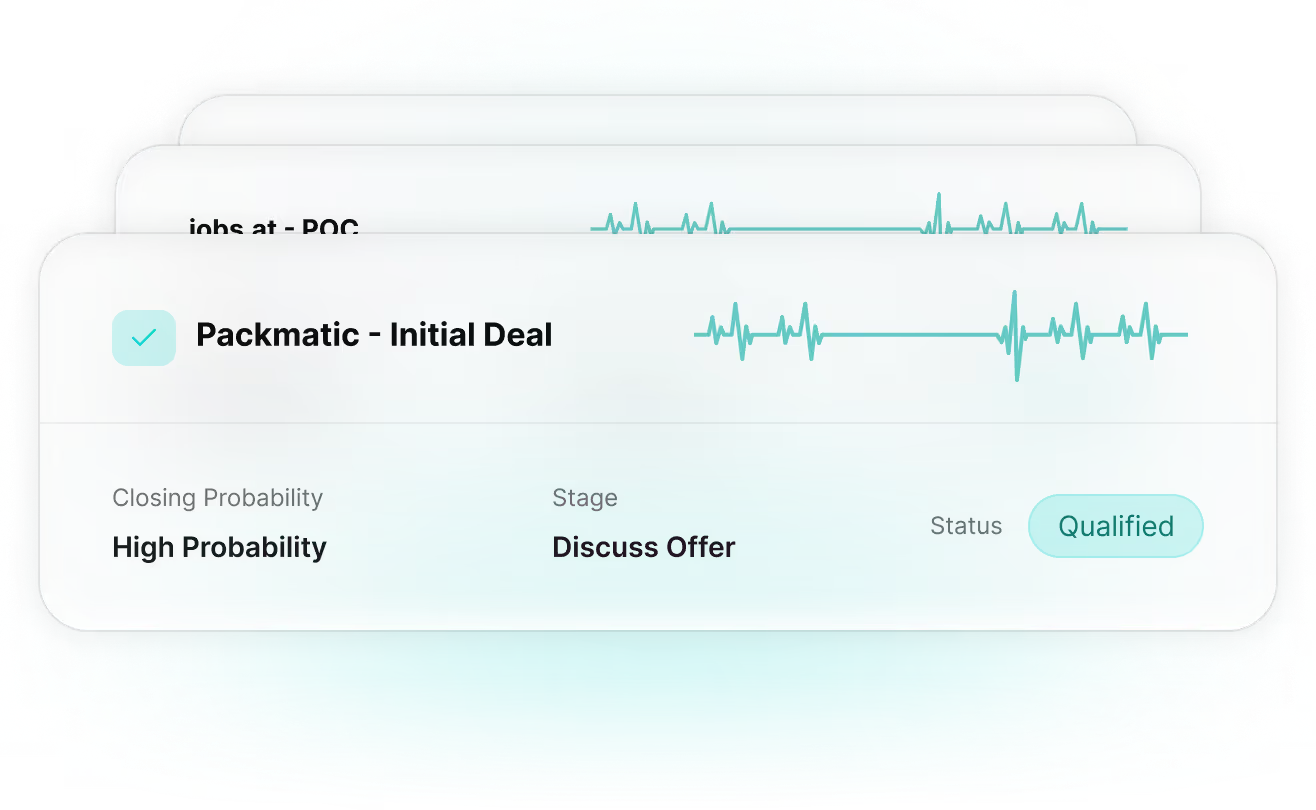
Through the analysis of over 100 data points per deal companies achieve extremely high forecast accuracy. You can immediately see the difference in your dashboards: Instead of a “wish list” of deals, you receive a list prioritized according to facts, which shows you exactly which transactions are most likely to end up in your account at the end of the month.
How does AI change my sales forecasts?
The AI analysis of your sales gives you clues to increase the probability of a deal even during the negotiation phase. Your sales forecast thus develops from a passive list at the end of the month to an active control tool.
- Early warning signals in the sales forecast: By analyzing conversation dynamics, Kickscale immediately identifies drastic changes. For example, if the contact frequency falls or important decision makers no longer attend appointments, the deal health score falls. You can see these warning signs in your dashboard and can take countermeasures before sales disappear from your planning.
- Sales coaching for your team: The technology filters out which arguments or questions were particularly effective in the final phase. Use these best practices to coach your entire team. You specifically discuss the deals where the data reveals a specific hurdle.
- Planning security for company growth: If you can rely on the forecasted figures, it's easier to make decisions about new hires or marketing investments.
- Synchronization with CRM: All findings from calls and emails end up in your CRM. This means that your sales team is always provided with the latest information and analysis results.
Sales Forecast — Frequently Asked Questions and Answers
Why are manual sales forecasts often erroneous?

Manually compiled forecasts are based on the subjective assessment of sales staff. Since important details from customer meetings are often not or only incompletely entered into the CRM, the forecast is based on incomplete information. This results in a distortion of the actual closing probabilities.
This is some text inside of a div block.
How does revenue intelligence improve predictive accuracy?
Revenue Intelligence uses AI to collect data directly from customer interactions (emails, video calls, phone calls). Instead of relying on manual notes, the software analyses objective signals, such as naming budgets or involving decision makers. The result is a data-based forecast without personal bias.
This is some text inside of a div block.
What role does CRM play in automated forecasting?
CRM remains the core system for managing customer data. Kickscale acts as an analysis level that automatically feeds the CRM with information from sales calls. As a result, the forecast remains up to date without additional effort on the part of sales staff.
This is some text inside of a div block.
From what team size is an AI sales forecast worthwhile?
AI sales forecasts are worthwhile for all companies that have a high volume of customer interactions or tend to manage complex B2B sales processes. As soon as the manual control of individual deals becomes too time-consuming for sales management, automation offers a real advantage in terms of planning security.
This is some text inside of a div block.
Can AI systems also recognize soft factors in conversations?
Yes, the Kickscale AI system also recognizes nuances in communication through analyses and keyword tracking. For example, it identifies whether the customer's objections have already been rebutted or whether enthusiasm for a solution is waning, and adjusts the deal health score accordingly.
This is some text inside of a div block.
This is some text inside of a div block.
This is some text inside of a div block.
Markus is the co-founder and CMO of the Vienna-based scaleup Kickscale, which develops AI-powered revenue intelligence technology for European sales teams. Before co-founding Kickscale, Markus started as one of Bitmovin's first SDRs and rose to Head of Global Digital Marketing, helping establish the video streaming company as a global leader.




Your sales team deserves clarity instead of guessing games
With our AI revenue intelligence platform, we help innovative sales teams make better decisions and close more deals.
Data-driven better pipeline decisions.
Latest articles for sales leaders who want to improve the quality of their CRM data, forecasts, and revenue operations.

Your sales team deserves clarity instead of guessing games
With our AI revenue intelligence platform, we help innovative sales teams make better decisions and close more deals. Experience the difference:

Deep customer understanding
Identify why customers buy or what prevents them from doing so – from all conversations

Objective forecasts
Finally make decisions based on hard facts instead of gut feeling

Deal prioritization
Focus your team on the opportunities with the highest potential