Sales Forecasting Software: The 7 Best Tools for Precise Revenue Projections Compared

Manual forecasting in Excel often leads to miscalculations in sales planning due to outdated data and subjective assessments. Modern sales forecasting software closes these gaps by analyzing CRM data and customer interactions in real time to calculate the probability of closing individual deals based on data. This enables reliable pipeline management and secures cash flow planning.
How do you choose the right sales forecasting software?
When choosing sales forecasting software, one thing is paramount: reliable, data-driven revenue forecasts without additional administrative effort. Modern AI sales forecasting tools dive deep into your pipeline and conversation data. Therefore, you should consider the following criteria when making your selection:
- Automated CRM data flow: Relevant information from meetings, emails, or phone calls is automatically transferred to the CRM – no manual data entry required.
- Deal risk analysis: The software identifies risk signals in the sales process and adjusts the probability of closing deals accordingly.
- Support for sales frameworks: Methods such as MEDDIC, BANT, or SPICED should be automatically recognized and factored into deal scoring.
- GDPR & server location: Crucial for companies in the DACH region – look for EU hosting and GDPR-compliant data processing.
- Precise speech processing: Technical terms and regional dialects should be reliably recognized so that important conversation details are captured correctly.
- Historical deal analysis: Good tools compare current opportunities with historical win/loss patterns to improve forecasts.
- Cross-platform data collection: All interactions from Zoom, Microsoft Teams, Google Meet, or phone calls should be consolidated centrally.
- Real-time pipeline updates: Changes in customer conversations are immediately reflected in the forecast – for up-to-date and realistic revenue projections.
7 popular sales forecasting software solutions compared
Kickscale
Kickscale ist ein europäischer Anbieter im Bereich Revenue Intelligence. Die Plattform erfasst Kundeninteraktionen aus Video-Calls, Telefonaten und E-Mails und stellt diese Informationen strukturiert für Vertriebsteams bereit. Ziel ist es, Gesprächsinhalte systematisch auszuwerten und für CRM-Systeme, Pipeline-Analysen und Forecasts nutzbar zu machen.
-
Datenerfassung über mehrere Kanäle: Die Software lässt sich mit Tools wie Microsoft Teams, Google Meet, Zoom sowie mit Telefonie-Lösungen verbinden. Zusätzlich steht eine mobile App zur Verfügung, mit der auch persönliche Gespräche im Außendienst oder auf Veranstaltungen dokumentiert werden können.
-
Analyse von Verkaufschancen: Gesprächsdaten werden ausgewertet und in Kennzahlen zur Entwicklung einzelner Deals überführt. Dadurch lassen sich Veränderungen im Verkaufsprozess nachvollziehen.
-
Automatisierter CRM-Abgleich: Informationen aus Meetings, etwa zu Budgets, Zeitplänen oder Entscheidern, können automatisch in CRM-Systeme wie Salesforce, HubSpot oder Pipedrive übertragen werden.
-
Unterstützung gängiger Sales-Frameworks: Gesprächsinhalte lassen sich nach Methoden wie MEDDIC, BANT oder SPICED strukturieren, um Qualifizierungsinformationen im Vertriebsprozess sichtbar zu machen.
-
DSGVO-konforme Datenverarbeitung: Nach Angaben des Anbieters erfolgt die Datenverarbeitung auf Servern innerhalb der Europäischen Union. Zudem stehen Funktionen zur Einholung rechtssicherer Einwilligungen für Gesprächsaufzeichnungen zur Verfügung.
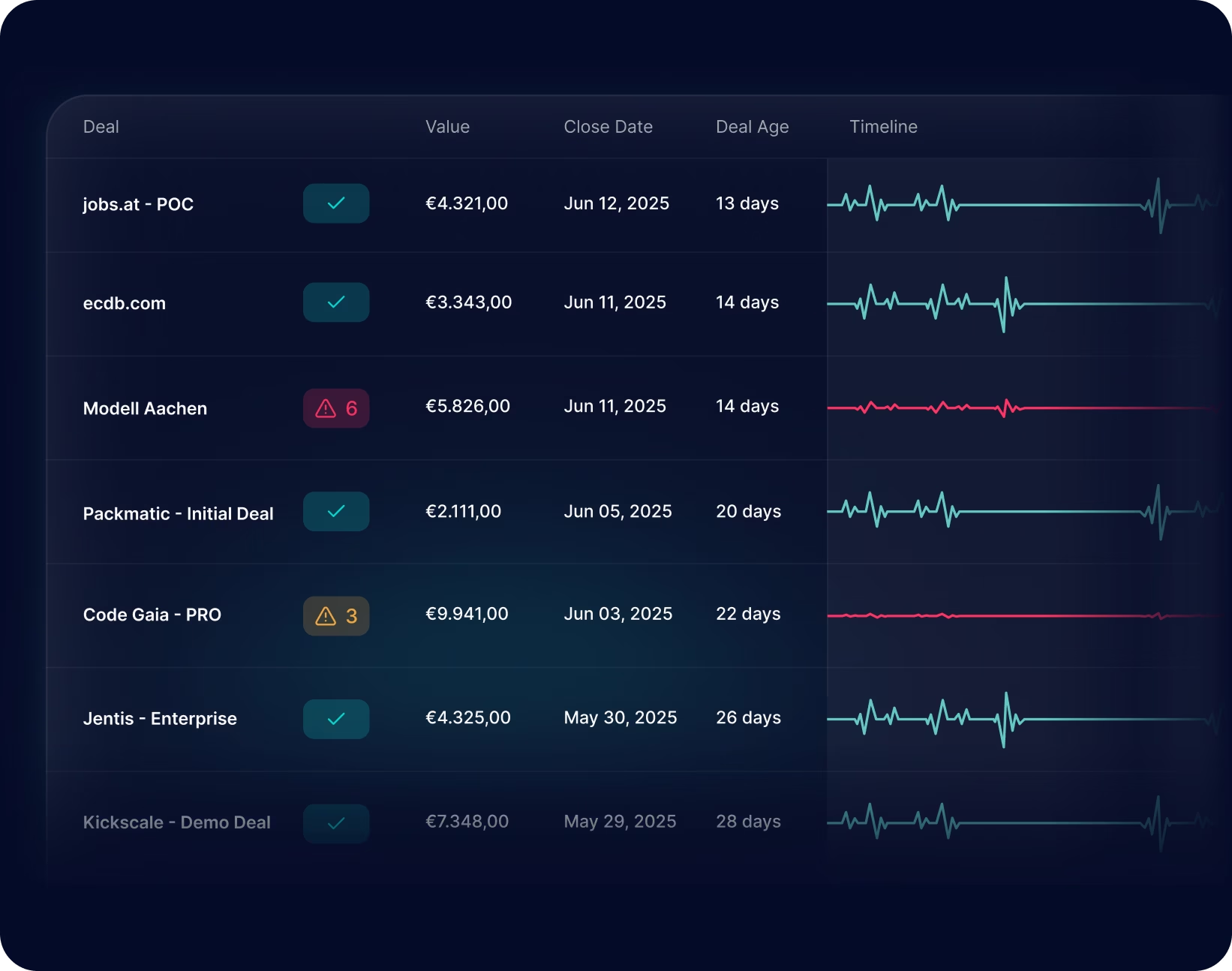
Der Einstieg in die automatisierte Erfassung von Vertriebsnotizen beginnt bei 39 € pro Nutzer und Monat. Eine kostenlose Testphase ist möglich. Preise für die vollständige Revenue-Intelligence-Plattform werden im Rahmen einer Produktdemo auf Anfrage bereitgestellt.
#2 Gong
Gong is a US-based provider that offers a platform for analyzing customer interactions. The system uses artificial intelligence to evaluate data from phone calls, video conferences, and emails to gain insights for sales processes and forecasts.
- Gong Forecast: This module provides forecasting features where projections are created based on factors including customer interactions and pipeline data.
- Sales opportunity analysis: The platform provides metrics on the development of individual deals and can flag potential risks in the sales process, such as when key stakeholders are less active or competitors are mentioned in conversations.
- Gong Engage: A workflow module that helps sales teams prioritize tasks and activities in their daily operations.
- Conversation analysis and coaching: Managers receive reports on conversation structures, such as talk-to-listen ratios, to derive training or coaching measures.
- Aggregated market intelligence: Conversation data from various customer contacts is consolidated to reveal trends in areas like pricing structures, product feedback, or objections.
Gong pricing (as of March 2026):
Gong does not list specific prices on its website. According to the provider, costs consist of an annual platform fee and a license fee per user.
#3 Clari
Clari is a platform for revenue operations and sales analytics that consolidates data from various sources to provide insights into pipelines, forecasts, and sales activities. The goal of the solution is to provide a unified data foundation for revenue forecasting and pipeline analysis.
- Clari Forecast: The forecasting module provides projections based on pipeline data. Forecasts from individual teams can be consolidated to provide an aggregated view of revenue projections.
- Time-Series Insights: The platform creates time-based views of the pipeline. This allows for tracking changes over time, such as the movement of individual deals or changes in pipeline volume.
- Revenue risk analysis: Clari provides reports that can indicate potential risks in the sales process, such as deals remaining in certain pipeline stages for extended periods.
- Pipeline Inspection: Managers get an overview of opportunities in the pipeline and can analyze them using various filters, such as deal stage, value, or activity.
- Integration: The platform offers integrations with CRM systems like Salesforce as well as other data sources to consolidate information for forecasts and analysis.
Clari pricing (as of March 2026): Clari does not communicate fixed package prices on its website. According to the provider, the model is tailored to the individual use case and does not include additional platform fees for integrations or support. A specific quote can be requested via the "Get a quote" feature.
#4 Salesforce (Einstein Forecasting)
Salesforce offers various features for sales forecasting and sales analytics within its CRM ecosystem. With solutions like Einstein AI, forecasts are generated based on existing CRM data. Additionally, Salesforce provides features for automating sales processes with Agentforce.
- Einstein Prediction & Sales AI: This module analyzes historical sales data, such as win rates or sales cycles, and calculates the probability of closing for active deals.
- Einstein Trust Layer: This security architecture is designed to protect sensitive customer data when using AI features and to control processing within the Salesforce infrastructure.
- Agentforce & CRM Automation: Agentforce provides features for automating tasks, such as summarizing conversations or drafting emails. This information can then be documented in the CRM.
- Hierarchical forecasts: Forecasts can be consolidated across multiple teams, regions, or sales units to create an aggregated view of the pipeline and revenue targets.
- Analysis of influencing factors: The platform provides reports that can show which factors are currently influencing forecasts, such as deal size or interaction frequency.
Salesforce pricing (as of March 2026): The cost of Salesforce depends on the edition, number of users, and selected add-on modules. Features like Einstein AI or Agentforce may incur additional fees depending on the setup. Specific prices are generally provided as part of an individual quote or a trial phase.
#5 HubSpot (Sales Hub)
HubSpot is a CRM platform that combines features for customer management, marketing, and sales management. The system is used by many B2B companies and, depending on the plan, also offers tools for pipeline analysis and revenue forecasting.
- Forecasting tool (from Professional): In the Professional and Enterprise plans, HubSpot provides forecasting dashboards that allow you to visualize sales team performance against set quotas.
- AI-powered deal probability: Based on historical CRM data, HubSpot can calculate the probability of winning individual opportunities and make changes in the pipeline visible.
- Pipeline inspection: The so-called pipeline inspection shows changes in the sales pipeline, such as adjustments to deal values, shifts in closing dates, or prolonged inactivity of individual deals.
- Flexible forecast categories: Various categories such as "Pipeline," "Best Case," or "Commit" can be used for forecasts. This allows different scenarios to be mapped in revenue planning.
- Native integration of sales activities: Emails, meetings, and calls can be recorded directly in the system. This data is then available for pipeline analysis and forecast evaluations.
HubSpot pricing (as of March 2026): The features required for forecasting start at €100 per user per month in the Sales Hub Professional plan. For larger organizations with complex team hierarchies and advanced permissions, the Enterprise plan is required at €150 per user per month. Please note that one-time onboarding fees (starting at approx. €1,470) apply when starting these plans.
#6 Aviso
Aviso is a revenue intelligence and sales forecasting platform that combines features for pipeline analysis, forecasting, and sales management. According to the provider, the solution is aimed specifically at companies with large sales organizations and complex sales processes.
- Revenue analysis across the entire customer lifecycle: The platform consolidates data from various stages of the sales process – from the initial opportunity to contract renewal – and makes this information available for forecasts and pipeline analysis.
- Deal forecasting based on AI models: The software uses data from CRM systems and other sources to calculate the closing probability of individual deals. Both internal sales data and other signals can be taken into account.
- Analysis of customer interactions: Aviso offers features for evaluating meetings and conversations to identify clues regarding objections, interests, or decision-making processes in the sales cycle.
- Support for next steps in a deal: Based on pipeline and forecast data, the system provides suggestions on which activities might be relevant in the sales process.
- Scenario analysis for forecasts: Executives can simulate various "what-if" scenarios to analyze the potential impact of market or sales team changes on revenue forecasts.
Aviso pricing (as of March 2026):
Aviso does not publish fixed pricing plans on its website. According to the provider, pricing is based on factors such as the number of users, data volume, and the scope of features. More detailed information is available during a product demo.
#7 Outreach
Outreach is a sales execution and sales automation platform that combines features for prospecting, pipeline management, and forecasting. The system processes data from various sales activities to provide analyses for pipeline and revenue planning.
- Pipeline management and analysis: The platform provides evaluations on deal progression. Sales managers can, for example, track when closing dates are adjusted or when the frequency of customer interaction changes.
- Analysis of interactions: Outreach can analyze content from emails and phone calls and derive additional information for pipeline analysis from it.
- Forecast scenarios: The software offers various views for revenue forecasts, such as team-based forecasts or system-based projections, to compare different assessments of the pipeline.
- Support in the sales process: The system can provide suggestions for potential next activities in the sales process, such as follow-ups or additional contacts in the decision-making process.
- CRM integration: Activities and changes in deal status can be synchronized with CRM systems such as Salesforce or Microsoft Dynamics.
Outreach pricing (as of March 2026):
Outreach does not publish fixed pricing plans on its website. According to the provider, the pricing structure is generally based on license costs per user per year. More detailed information is provided during a product demo or needs analysis.
Is Kickscale the right sales forecasting software for you?
Sales forecasting software can support your revenue planning if you want to make your forecasts more data-driven. While some solutions primarily visualize CRM data, other systems additionally use information from customer interactions.
Modern platforms can, for example, incorporate data from video calls, emails, or phone calls into the analysis. This creates a broader data foundation for forecasts and pipeline analysis. In addition to expected revenue development, potential risks in individual deals can also be identified earlier.
Frequently Asked Questions
What is the difference between qualitative and quantitative sales forecasting?

Qualitative forecasting is based on subjective expert assessments and intuition, which is essential for market entries without historical data. Quantitative forecasting, on the other hand, uses mathematical models and historical transaction data to precisely calculate objective trends for established business areas.
This is some text inside of a div block.
How does predictive analytics improve the accuracy of revenue planning?
Predictive analytics analyzes historical sales data and identifies patterns that are often difficult to recognize in manual evaluations. By combining real-time interaction signals with historical win rates, forecasts can be created on a data-driven basis, providing more solid support for budget planning.
This is some text inside of a div block.
Why is clean data hygiene in the CRM crucial for AI-based forecasting?
Artificial intelligence relies on valid datasets, as incomplete or outdated information in the CRM inevitably leads to skewed results. Consistent data maintenance ensures that algorithms calculate accurate probabilities and provide reliable decision-making foundations for management.
This is some text inside of a div block.
What role does sales methodology play in creating reliable forecasts?
Uniform standards like MEDDIC or SPIN Selling help to evaluate sales opportunities in a more structured and comparable way. This reduces the influence of individual assessments. When the entire team uses the same qualification process, the forecast can be created more consistently and serve as a more solid basis for strategic decisions.
This is some text inside of a div block.
How does sales forecasting software support risk management within a company?
The software acts as a digital early warning system by identifying potential risks in the pipeline at an early stage. This allows companies to frequently detect financial bottlenecks early and respond to them more effectively.
This is some text inside of a div block.
To what extent does modern forecasting influence the collaboration between sales and marketing?
A shared data foundation ensures aligned lead management and targets marketing investments specifically toward channels with the highest probability of closing. Software ensures that all teams can access the same data, reducing friction and inefficiencies.
This is some text inside of a div block.
This is some text inside of a div block.
Markus is the co-founder and CMO of the Vienna-based scaleup Kickscale, which develops AI-powered revenue intelligence technology for European sales teams. Before founding Kickscale, Markus started as one of the first SDRs at Bitmovin and rose to become Head of Global Digital Marketing, where he played a key role in establishing the video streaming company as a global market leader.




Your sales team deserves clarity instead of guessing games
With our AI revenue intelligence platform, we help innovative sales teams make better decisions and close more deals.
Data-driven better pipeline decisions.
Latest articles for sales leaders who want to improve the quality of their CRM data, forecasts, and revenue operations.
.png)
.png)

Your sales team deserves clarity instead of guessing games
With our AI revenue intelligence platform, we help innovative sales teams make better decisions and close more deals. Experience the difference:

Deep customer understanding
Identify why customers buy or what prevents them from doing so – from all conversations

Objective forecasts
Finally make decisions based on hard facts instead of gut feeling

Deal prioritization
Focus your team on the opportunities with the highest potential