What really makes a great salesperson
Features, benefits, or decision confidence: Which sales approach actually leads to more closed deals.

Many sales training programs focus on the perfect pitch: the right words, the most persuasive demo, the most elegant objection handling. The problem is that none of these reliably predict who will close the most deals. To truly measure a salesperson, you have to look at their behavior across all conversations leading up to the closed deal, not just individual highlights.
Features, benefits, decision confidence: three different games
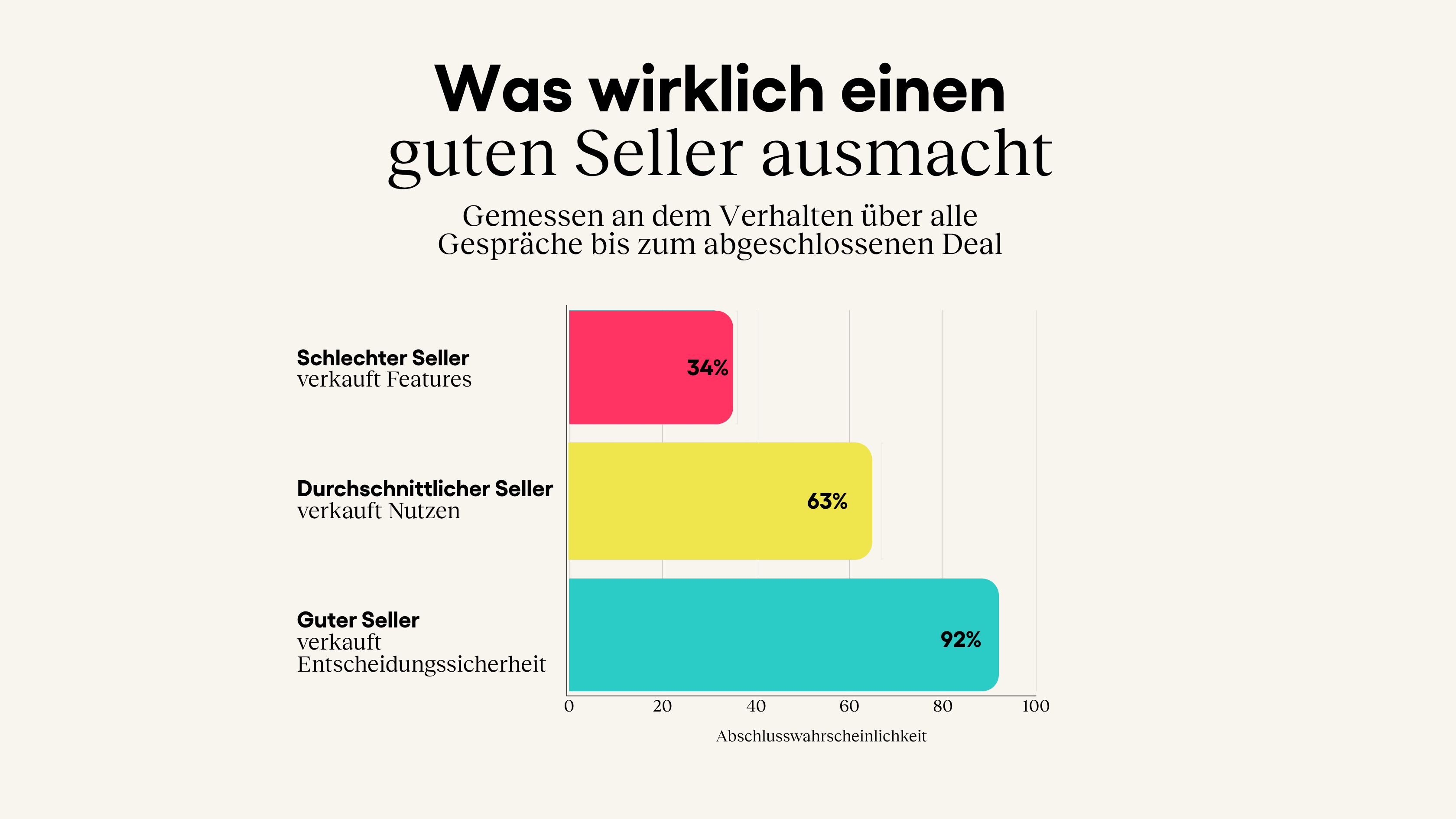
Bad salespeople talk about features. They explain what the product can do and hope the buyer makes the connection to their own problems. Average salespeople go a step further: they translate features into benefits and show what the solution specifically improves. Both approaches fall short.
Great salespeople sell decision confidence. They understand that a buyer doesn't just need to explain what a product does internally, but why they should invest now, why this problem is a priority, why this budget is justified, and why the risk remains manageable. That is a fundamentally different conversation.
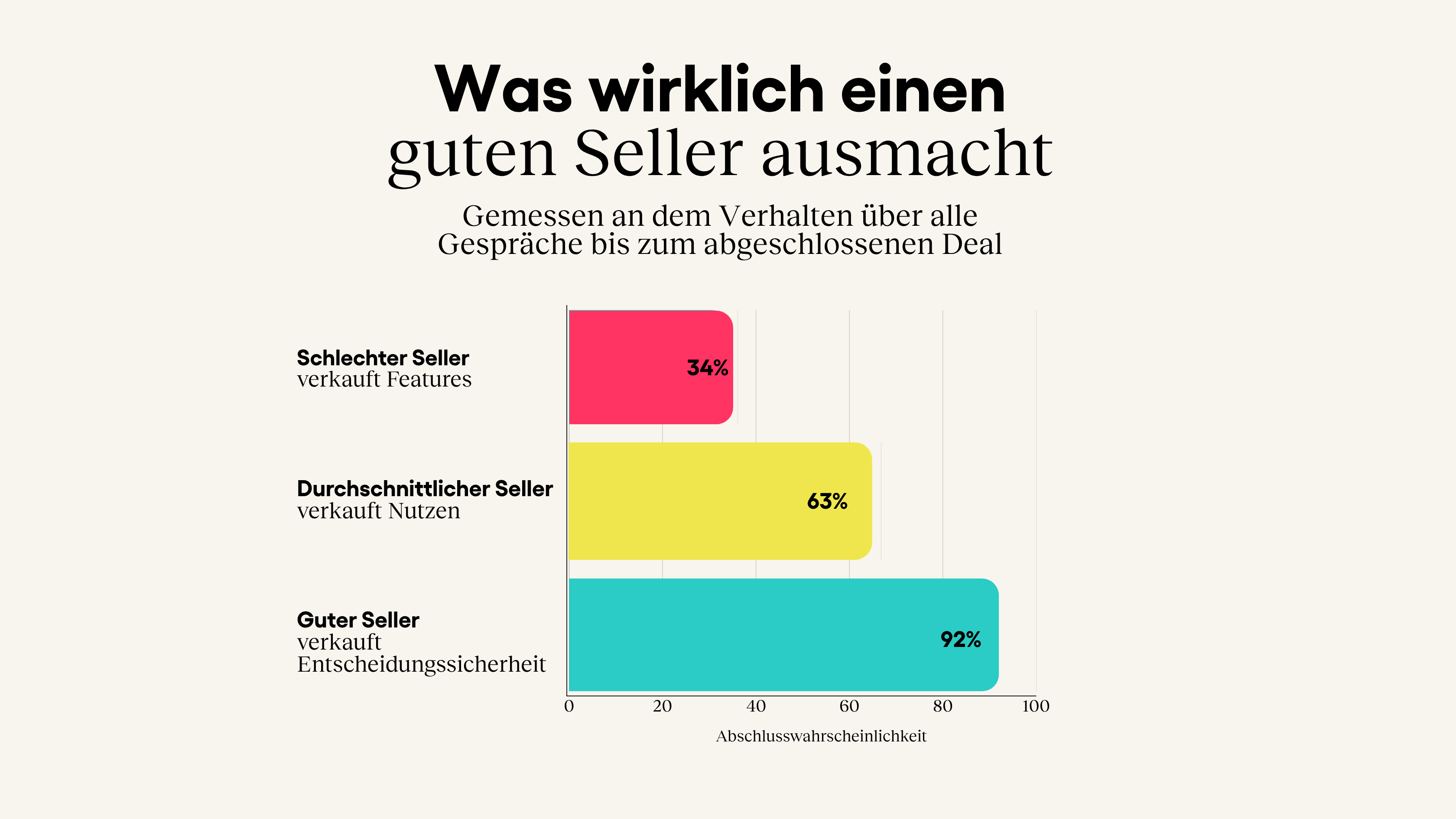
The numbers in the chart speak for themselves: salespeople who focus on decision confidence achieve a 92 percent close rate. Those who focus on benefits reach 63 percent. Those who only sell features land at 34 percent. The difference between feature-selling and decision-selling is no longer a marginal advantage, but a fundamental lever.
Why buyers need decision confidence
B2B purchases are rarely decided by one person alone. Anyone looking to introduce a new solution within a company must convince stakeholders, defend the budget, and explain risks—often without the salesperson present. The champion sits in the next internal meeting alone and needs arguments that work even when no one from the vendor is in the room.
Top salespeople prepare exactly for that. They give the champion a clear answer to every internal counter-question: Why now? Why this problem over others? Why this vendor and not the cheaper alternative? Those who leave these questions unanswered don't lose deals during the demo, but afterward, in silence.
In short: Good selling reduces friction. Not just for the buyer themselves, but for the entire decision-making system behind them.
How top salespeople actively shape the buying process
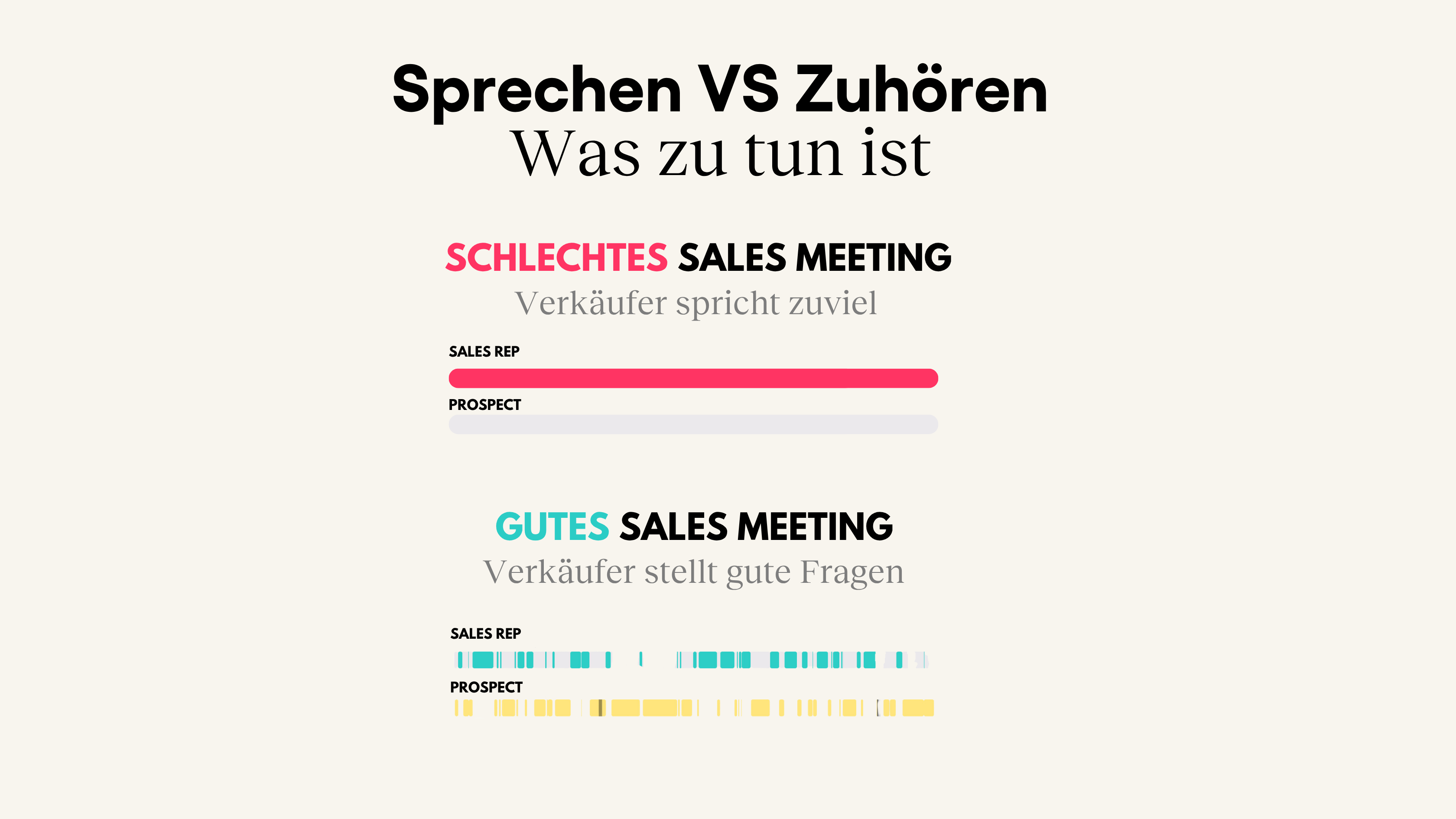
The difference between average and strong salespeople often lies not in talking, but in listening and structuring. A good salesperson understands early on who makes the decisions internally, where the resistance lies, and what language resonates within the buyer's company. Discovery is not a mandatory chore before the demo, but the true heart of the process.
After that, it's about actively empowering the champion: with clear messaging, concrete ROI arguments, and a risk assessment that holds up internally. Sometimes that means asking uncomfortable questions before the buyer is asked them internally. Those who do this don't come across as pushy, but as a reliable partner in the procurement process.
What this means for sales coaching
If decision confidence is the deciding factor, then coaching must focus on exactly that. Pitch training alone is not enough. It is more important that salespeople understand how internal decision-making processes work for their buyers and how to equip the champion with the right arguments.
AI-powered conversation analysis can help make patterns visible: In which calls do salespeople ask the right questions about internal decision logic? When are these questions missing, and how does that correlate with "no decision"? Those who base coaching on actual conversation behavior rather than gut feeling develop salespeople much more effectively.




Your sales team deserves clarity instead of guessing games
With our AI revenue intelligence platform, we help innovative sales teams make better decisions and close more deals.
More insights from the Research Hub
Latest benchmarks and studies for data-driven revenue teams.