Feature dumping: Why fewer features lead to more closed deals
Feature dumping kills deals. Data shows: demos with 1-3 features achieve a 64% close rate. Here is how to lead a focused demo.

Many sales reps believe a compelling demo needs to be as comprehensive as possible. The more features shown, the better the impression. The data clearly contradicts this.
What the numbers say
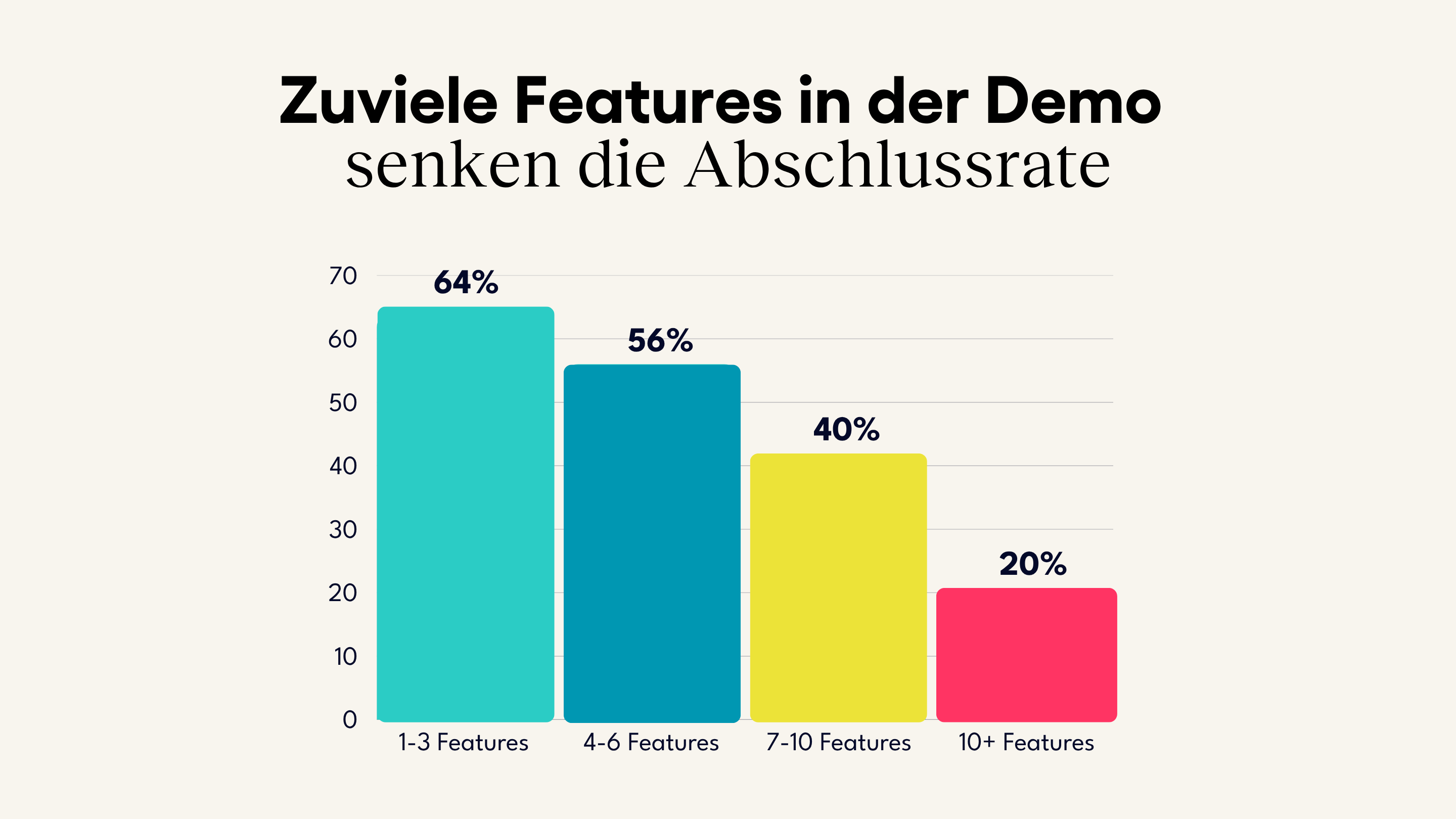
Demos with 1 to 3 features achieve a 64 percent close rate. With 4 to 6 features, it drops to 56 percent, and with 7 to 10, it falls to 40 percent. Those who show 10 or more features end up at 20 percent.
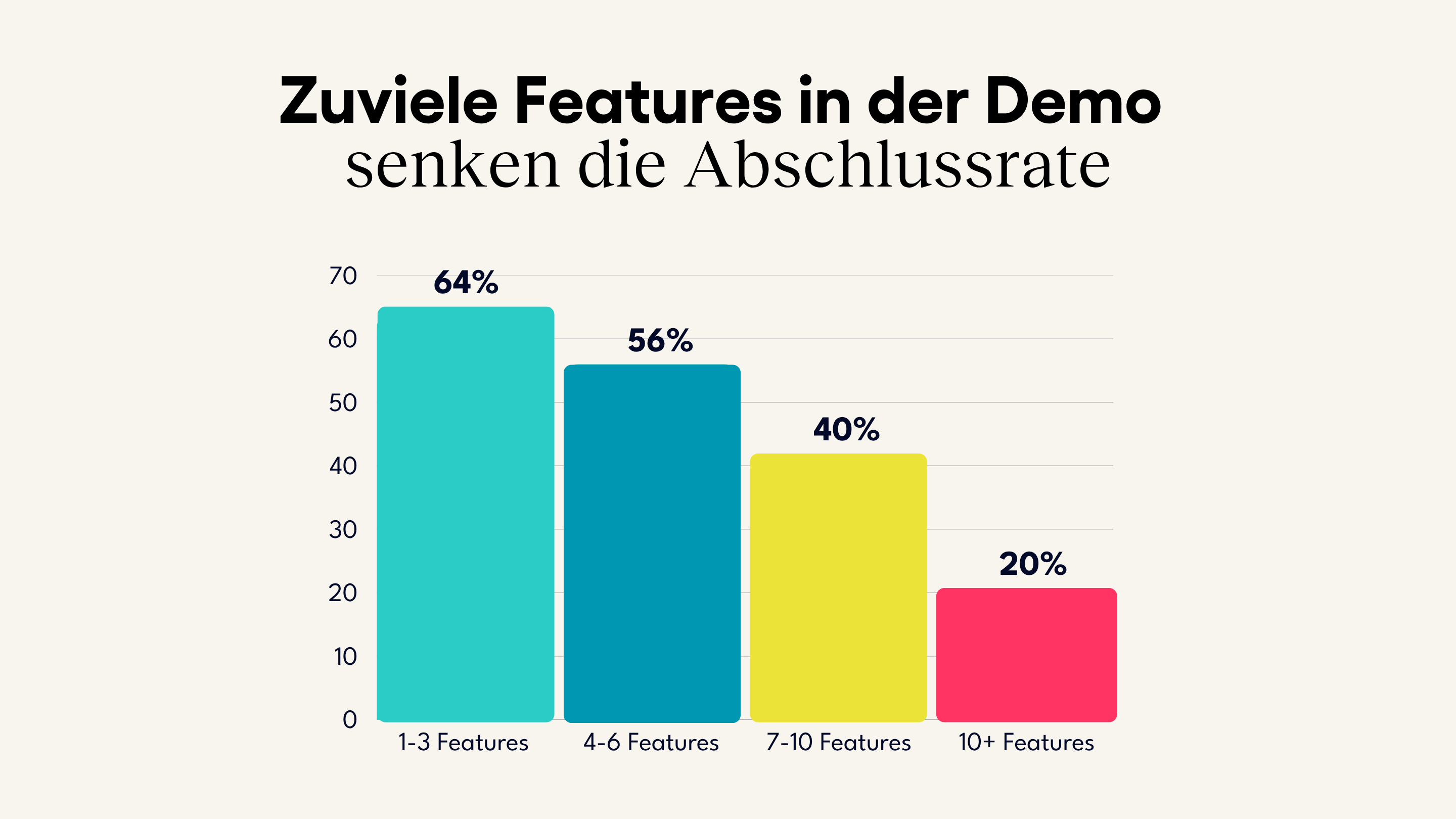
This decline is no coincidence. At a certain point, the demo shifts from a sales conversation to a product tour. The prospect sees a lot but no longer understands why this specific product solves their concrete problem. Relevance is lost, and decisions are delayed or never made.
Why relevance is more persuasive than completeness
In a demo, the buyer's brain isn't looking for volume; it's looking for answers. Specifically: Does this product solve my biggest pain point? Those who answer this question quickly and clearly win trust. Those who work through feature after feature instead create cognitive load and dilute the very moment when clarity could emerge.
Top performers therefore identify the one feature that matches the account's specific pain point before the demo and start exactly there. Not because they are hiding the rest, but because a strong opening immediately provides direction. Everything else builds on that.
What focused demo leadership looks like in practice
The difference between an average demo and a strong one rarely lies in the product; it usually lies in the preparation. Average reps take the standard demo, maybe update the company name, and work through the feature list. Strong reps ask the right discovery questions beforehand, prioritize accordingly, and build the demo around a maximum of three core points.
In concrete terms, this means: Start with the feature that addresses the biggest pain point. Then, show a maximum of two additional features that are directly related or address a second validated pain point. Everything else is only shown upon explicit request, and even then, only in moderation.
Consistently applying the three-feature rule
The rule is simple to state but hard to stick to. The urge to show "one more useful feature" is palpable in almost every demo. This is exactly where it is decided whether a rep is leading a sales conversation or giving a product presentation.
A practical anchor: Before showing any feature, ask yourself if the prospect brought it up themselves or if it directly addresses a validated pain point. If neither is true, leave it out. The demo won't be poorer for it; it will be sharper.
In a demo, focus is not a limitation. It is the signal that you have truly understood the buyer and their problem.




Your sales team deserves clarity instead of guessing games
With our AI revenue intelligence platform, we help innovative sales teams make better decisions and close more deals.
More insights from the Research Hub
Latest benchmarks and studies for data-driven revenue teams.