Why top sellers talk less and ask more
How targeted questions get buyers talking and why that determines whether you win or lose.

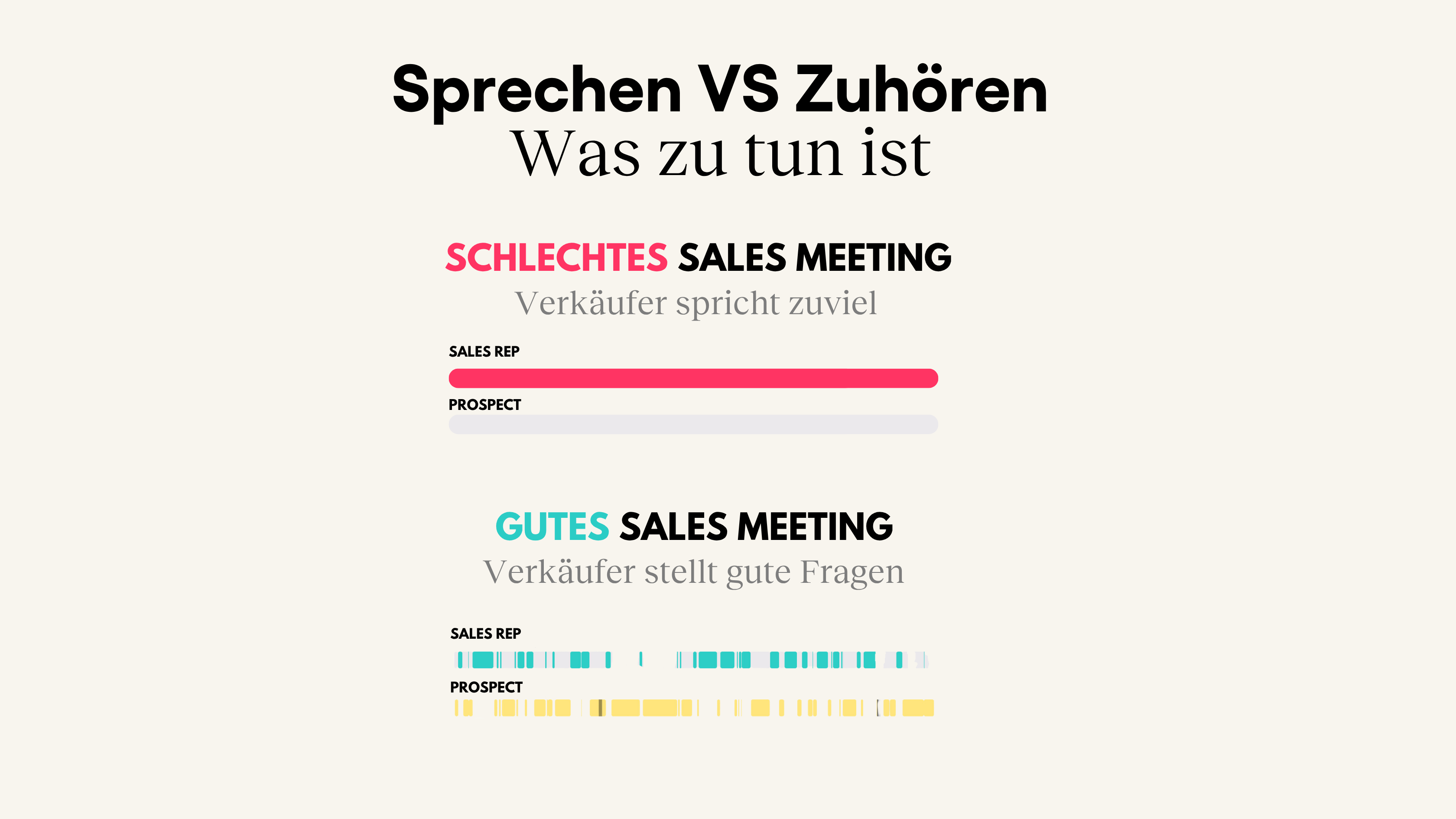
Imagine two sales meetings. In both, an hour was spent talking, an agenda was covered, and a follow-up was scheduled. You won't see the difference in your calendar, but in your CRM afterward: one contains a detailed summary of pain, the buying process, and concrete risks. The other says: "Good conversation, interest exists."
The real goal of a discovery meeting
Many salespeople prepare for a meeting as if it were a stage performance. Clear storyline, slides, transitions. The problem: the buyer isn't in the audience. They are the actual source of information, and as long as the salesperson is talking, the buyer isn't revealing any of it.
The goal of a discovery call isn't to present well. It's to understand better: What is the actual problem? How are decisions made today? Who is involved internally, and what happens if nothing changes? You only get these answers if you create space instead of filling it.

Surface-level questions vs. questions that trigger stories
There is a qualitative difference between questions that produce short answers and questions that get the buyer talking. "What is your challenge?" is a legitimate question. But it invites a one-sentence answer, and then the salesperson starts talking again.
Questions like "Can you walk me through the last time this was a problem?" work differently. They demand a narrative. The buyer has to get specific, provide context, and name the people involved. These stories are exactly where the real buying motives are hidden: the internal pressure, the business impact, the buying committee, and the timeline.
The same applies to questions like "What happens internally when this process doesn't work?" or "How would your team notice that things have improved?" Both questions shift the perspective away from the product and toward the buyer's reality. This isn't a rhetorical trick; it's the foundation of every sound sales decision.
Why this directly impacts forecast quality
Poor discovery creates blind spots. You don't know who really makes the decision. You don't know how urgent the problem actually is. You don't know what risks the buyer sees themselves. And at the end of the quarter, you wonder why deals that were in the forecast suddenly end in "no decision."
Good questions close these gaps. If you know the pain, impact, timing, buying committee, and the buyer's internal risks, you can make a deal decision based on real information—not on gut feeling or the intensity of the last conversation.
What top sellers do differently
They prepare questions, not presentations. They plan what information they need to take away from a meeting and work backward from that goal. If a meeting ends and the champion isn't yet identifiable, the discovery was incomplete, no matter how well the demo was received.
They don't interrupt when the buyer gives a detailed answer. Long answers aren't a conversation problem; they are the product of good work. Anyone who jumps in to show the next slide loses the very information they asked the question to get. Listening isn't a passive stance; it's an active choice.
Top sellers don't persuade by talking more. They make better decisions because they find out more. And that is exactly the difference between a pipeline entry and a won deal.




Your sales team deserves clarity instead of guessing games
With our AI revenue intelligence platform, we help innovative sales teams make better decisions and close more deals.
More insights from the Research Hub
Latest benchmarks and studies for data-driven revenue teams.