Likability vs. Clarity: When each matters in B2B sales
Data-driven: In which sales phase does likability help, and when does clarity win? The answer might surprise you.

Many sales training programs teach a simple lesson: be likable, and the rest will follow. In the reality of DACH B2B sales, that’s only half the story. Likability isn't a universal tool; it has a specific area of application. If you don't understand that, you won't lose deals at the first contact—you'll lose them during negotiations or, at the latest, in procurement.
What the data shows: Likability dominates early, clarity dominates late
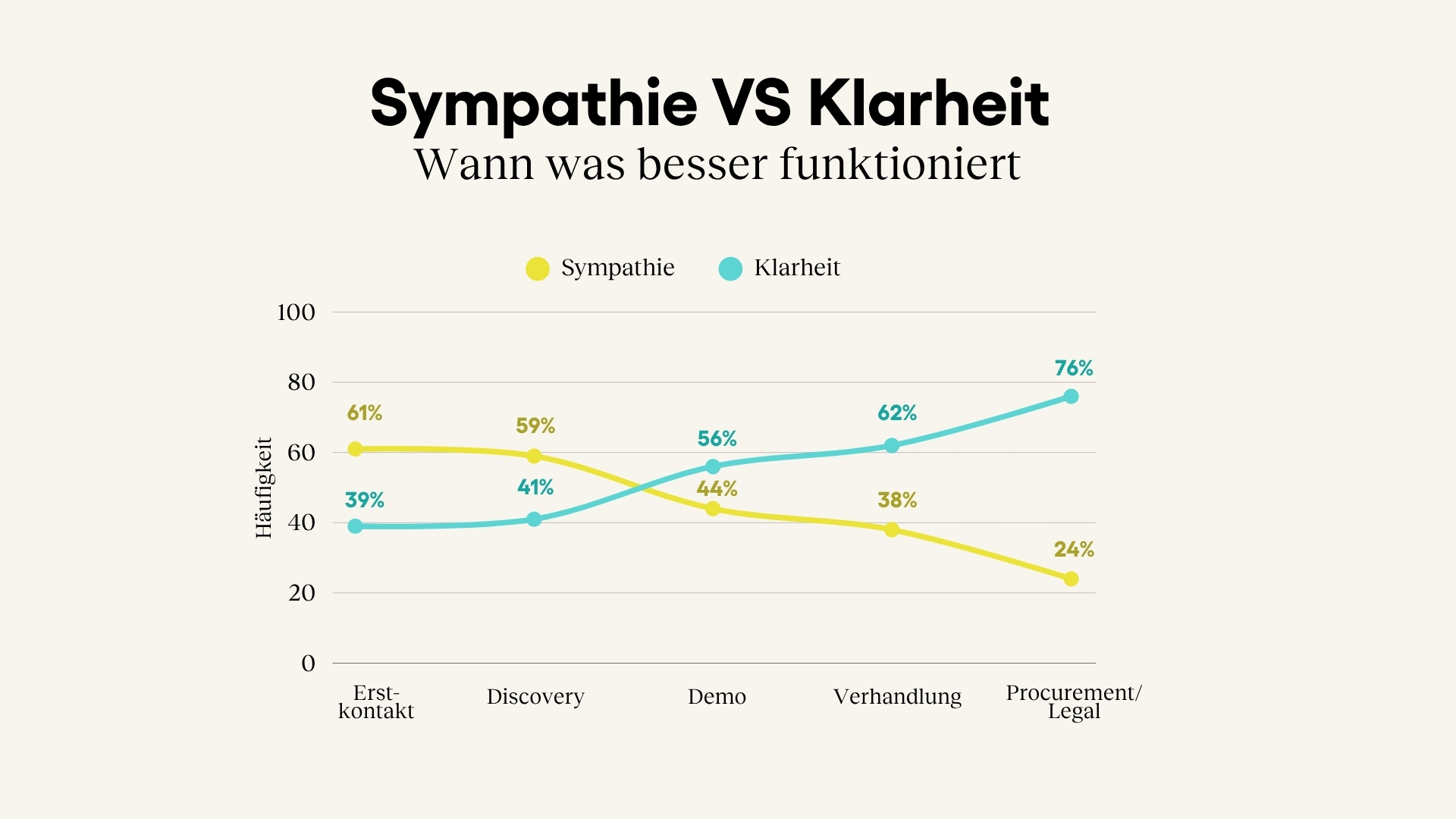
In our analysis of sales meetings, we measured which communication style correlated more frequently with positive deal progress in each phase. Likability was measured through signals like active listening, positive conversational dynamics, empathy, and the buyer's willingness to share more context. Clarity was measured through signals like precise problem summaries, measurable impact, identifiable risk, a sound business case, and concrete next steps.
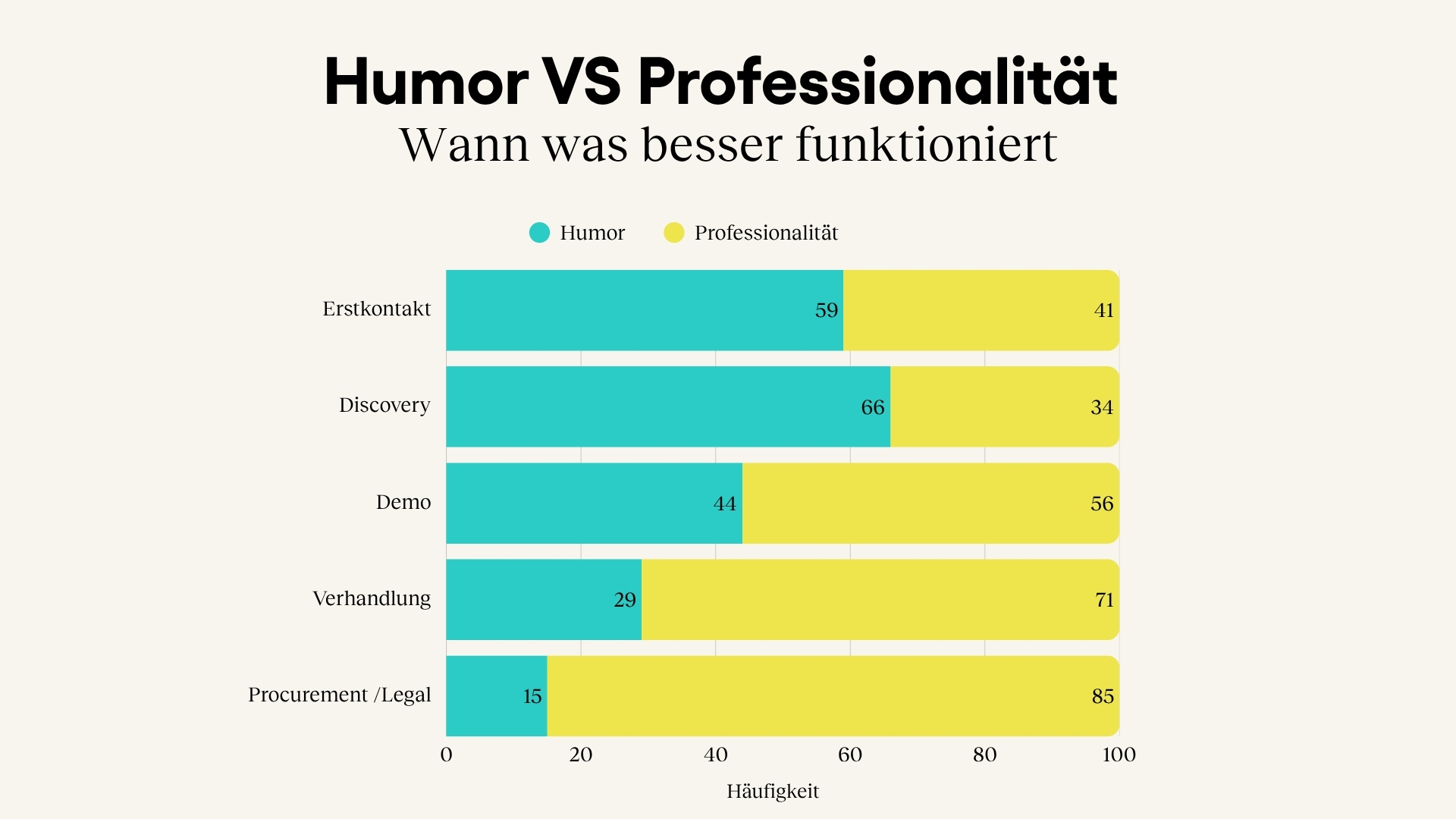
The results show a clear crossover point: In the initial contact, likability dominates at 61% compared to 39% for clarity. The picture remains similar in the discovery call (59% to 41%). From the demo onwards, the ratio flips. By the time you reach procurement and legal, clarity accounts for 76%, while likability drops to 24%.
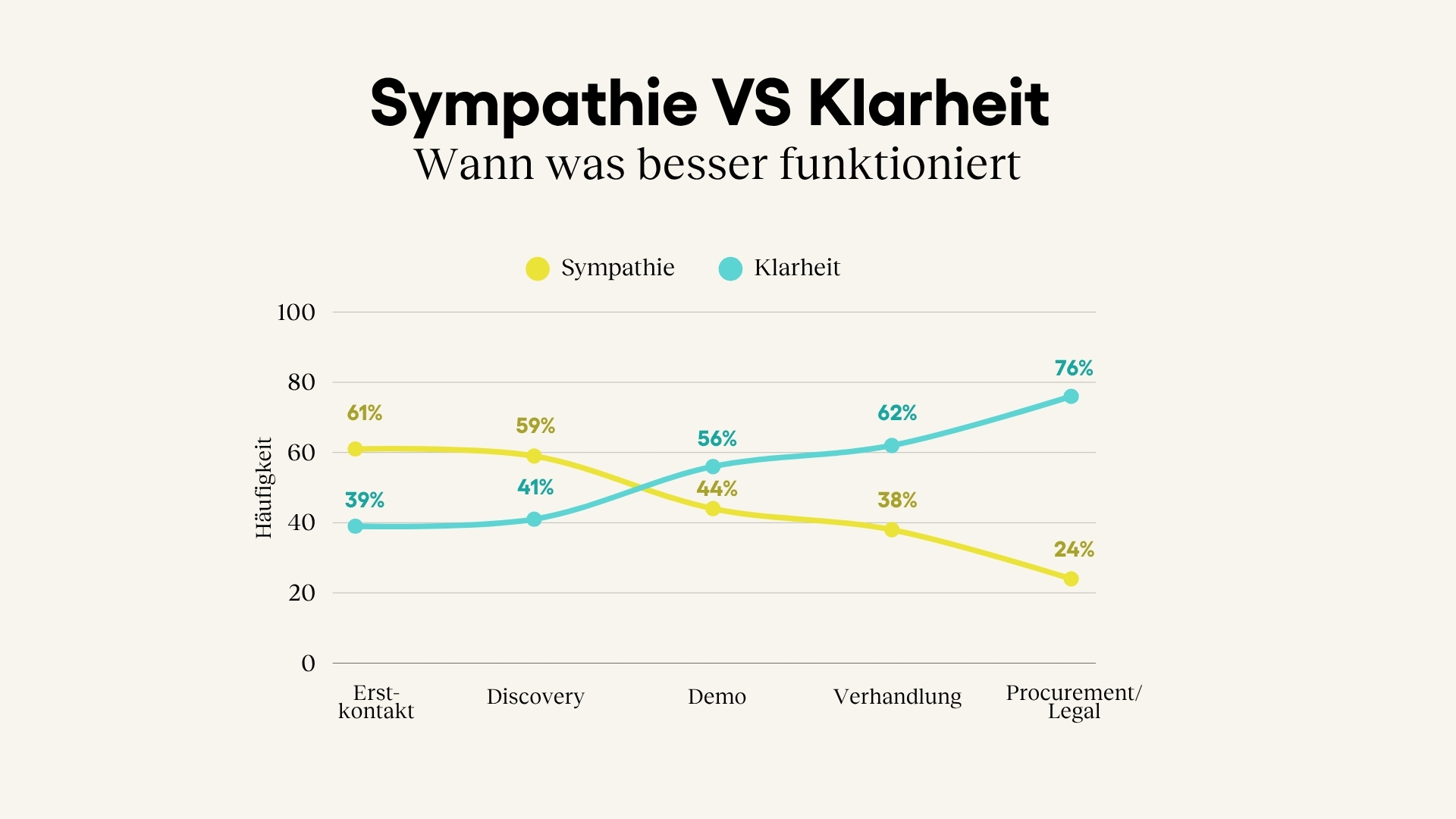
The crossover happens between discovery and the demo—exactly where many sellers stay in "relationship mode" even though the buyer has long since shifted into "decision mode." This is the point where deals stall or end in a "no decision."
Two extremes, one common problem
In DACH B2B sales, there are two recurring archetypes. On one side, you have the seller who instantly builds rapport, masters the introduction with confidence, but fails to hold a clear position during negotiations or articulate a sharp business case. On the other side, you have the technically excellent seller who impresses during the demo but comes across as cold during the initial contact and rarely fosters genuine openness from the buyer.
Both types have blind spots. The likable seller loses deals when procurement enters the room. The clear seller sometimes never even makes it to the demo because they failed to build trust.
What sets top sellers apart isn't a special talent for likability or structure. It’s the ability to switch gears based on the phase.
Likability and clarity are not opposites
It’s not about choosing between two styles. On the contrary: if you don't build a foundation of trust in the early phases, you will never get the honest information you need for a compelling business case later on. And if you don't provide clarity in the later phases, you squander the trust you’ve worked so hard to earn.
Discovery calls aren't just about building relationships. They are the moment when likability opens the doors so that clarity can enter: What is the customer's real problem? What is the measurable impact? What is holding them back from acting? A seller who stays in discovery mode and never shifts to clarity collects information without ever putting it to use.
The framework: Communicating by phase
This practical approach isn't about changing your personality. It’s about consciously steering the conversation based on where the deal currently stands. In the early phases, curiosity is your primary tool. In the later phases, it’s structure.
What leaders and revenue teams can take away from this: Coaching shouldn't aim for "more likability" or "more clarity," but for phase awareness. Does the seller know which phase they are in? Do they recognize the moment the buyer shifts from exploration to decision? Can they react to that without damaging the relationship they’ve built?
AI-powered conversation coaching can help exactly here: by showing after every meeting whether the communication style matched the phase and providing specific feedback on where the seller stayed in the wrong mode for too long.




Your sales team deserves clarity instead of guessing games
With our AI revenue intelligence platform, we help innovative sales teams make better decisions and close more deals.
More insights from the Research Hub
Latest benchmarks and studies for data-driven revenue teams.