Objection handling in B2B sales: Methods, examples, and how teams learn from them

Objection handling is the ability to respond to concerns like "too expensive" or "no need" with targeted questions to keep the conversation moving. In B2B sales, with multiple decision-makers and long sales cycles, this response often determines whether a deal moves forward.
Objection Handling: The Essentials
- Objection handling refers to the structured response to concerns such as "too expensive" or "no need," with the goal of clarifying the underlying worry and actively continuing the conversation.
- Open-ended follow-up questions, the isolation technique, and proactive anticipation are among the most effective methods for neutralizing concerns in B2B sales.
- The most common objections in B2B sales revolve around price, budget, existing providers, and immediate need. Each can be opened up with a specific follow-up question.
- Kickscale records authorized sales calls and makes recurring objections visible to the team, allowing sales leaders to develop a shared playbook based on individual responses.
What is objection handling?
Objection handling is a salesperson's response to a concern raised by a potential customer during a conversation before they decide to purchase. The customer is usually signaling genuine interest: they are engaging with the offer and seeking additional reassurance before committing.
In B2B sales involving multiple decision-makers, it is important to distinguish between an objection and a stall. An objection identifies a real concern, such as price or integration with existing systems. A stall, however, masks a different, usually unspoken issue, such as a lack of trust in the provider or a decision already made in favor of a competitor.
This distinction determines the right response. For an objection, an argument or example helps. For a stall, no argument will work as long as the underlying reason remains unaddressed. A targeted follow-up question is usually more effective here than a hasty answer.
What are the most common objections in B2B sales?
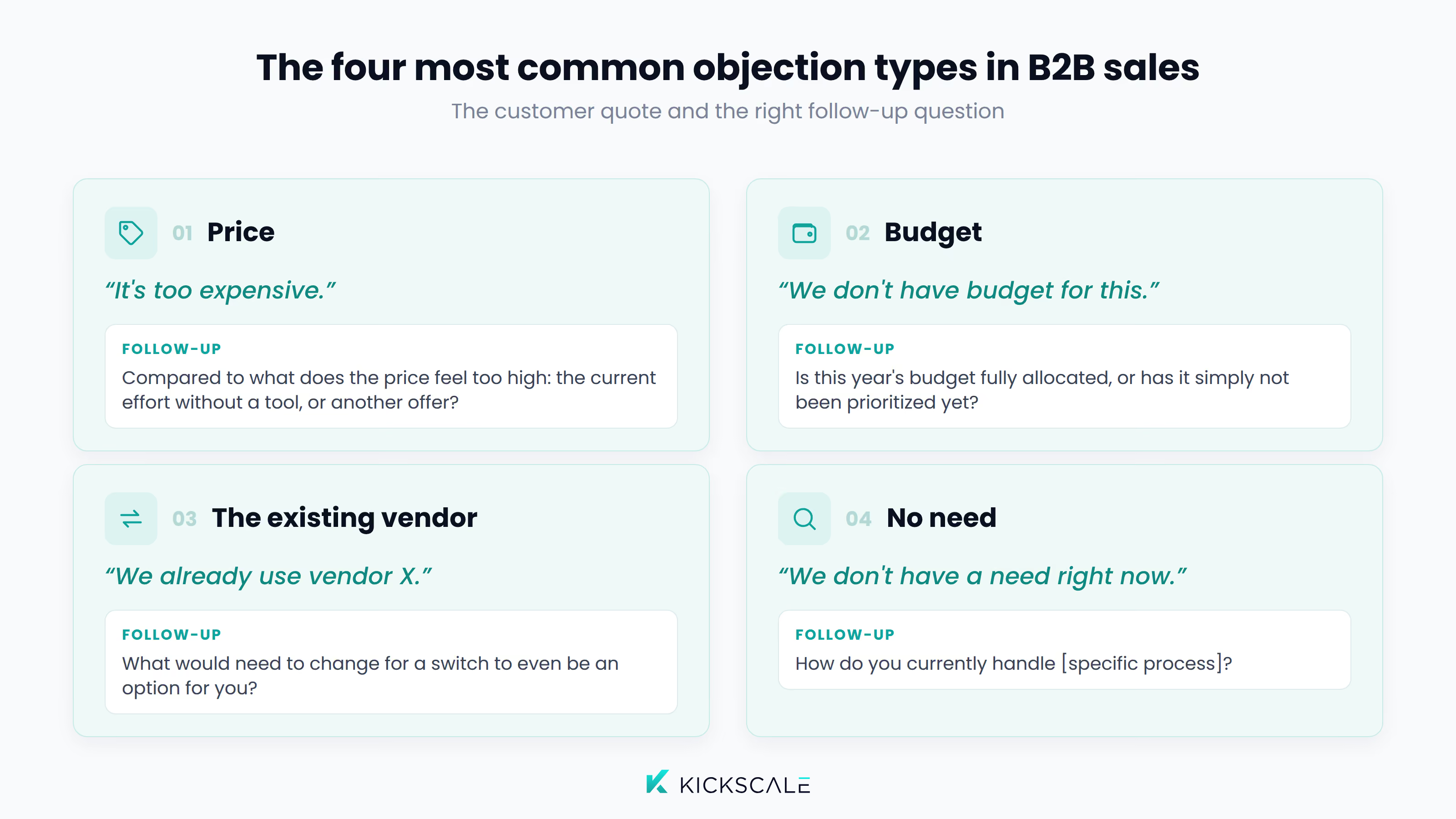
Four objections appear in almost every B2B sales cycle: price, budget, an existing provider, and a lack of current need. Each sounds like a rejection, but usually represents an open question that can be clarified with the right follow-up.
Objection: "That's too expensive"
A price objection rarely means the customer lacks the funds. More often, the connection between the price and the concrete value for their company is missing.
A possible follow-up question: "Compared to what does the price seem too high—the current effort without the tool, or another offer?" The answer reveals whether a better value proposition is sufficient or if a different budget is actually required.
Objection: "We don't have the budget for that"
A budget objection can be a fact or a stalling tactic. The difference becomes clear with the next question: "Is the budget for this year fully allocated, or has a priority not yet been set for this?"
If there is a genuine budget limit, a timeline for the next quarter is a good way forward. If it is a lack of priority, it is worth revisiting the specific business case the customer previously formulated themselves.
Objection: "We already use Provider X"
An existing provider is no reason to end the conversation. Customers rarely switch because of individual features, but rather because of a problem that their current tool does not solve.
A helpful question: "What would need to change for you to even consider switching?" This shifts the focus to the actual gap in the current setup and makes a forced feature-by-feature comparison unnecessary.
Objection: "We don't have a need right now"
This objection often comes up early in the conversation, before the customer has clearly defined their own problem. Asking about their current process often reveals a gap that the customer hasn't yet identified as a need.
Example: "How are you currently handling [specific process]?" The answer often provides the starting point for the rest of the conversation, without any pressure. Throughout B2B sales involving multiple decision-makers, these four patterns repeat across almost every industry.
What methods can be used to defuse an objection?
Three methods cover most situations: the open counter-question, the isolation technique, and the proactive anticipation of an objection. All three buy time and provide information before you eventually provide an answer.
The open counter-question
An open-ended question buys you time to assess the situation before responding. Instead of arguing immediately, ask about the background first. Example: "What exactly do you mean by that?" This question clarifies whether you are dealing with a genuine objection or a pretext, and provides the foundation for your next response.
The isolation technique
The isolation technique separates one objection from any other potential concerns before you address it. This prevents multiple unresolved points from lingering at the end. Example: "If we can resolve the pricing, are there any other open questions?" If the customer confirms that price is the only issue, you can focus specifically on that.
Proactive anticipation
If an objection comes up regularly with a proposal, address it yourself before the customer does. This makes you look prepared and takes the sting out of the objection. Example: "Many companies ask about the implementation time at this stage. For us, the setup usually takes just a few hours." This technique only works for objections that actually occur frequently. If you use it for rare concerns, you might just be planting the idea in their head.
How does objection handling work in a sales call?
Objection handling in a sales call follows five steps: listen, mirror the objection, clarify the root cause, provide a relevant answer, and transition to the next step.
- Listen without interrupting. Let the customer finish stating their objection, even if the direction seems clear after the first few words.
- Mirror the objection in your own words. A brief summary shows that you have understood and gives the customer a chance to correct you.
- Clarify the root cause with a follow-up question. An open or closed counter-question separates a real objection from a pretext.
- Provide a concrete answer. An argument, an example, or a figure is more effective than a general assurance.
- Transition to the next step. A follow-up appointment or a concrete agreement keeps the conversation moving.
The individual phases of a sales call show when an objection is most likely to arise.
What circumstances hold sales teams back?
Most teams do not collect objection-related knowledge systematically. It stays in the heads of individual reps and is lost when they leave. If you record and analyze calls, however, you make patterns visible that would otherwise only become apparent after many lost deals.
Why objection knowledge rarely reaches the whole team
In your team, new colleagues usually learn from their own first conversations, not from the sum of all conversations the team has already had. Which answer to "it's too expensive" actually works remains unclear if no one systematically compares the results of different phrasings. When there is turnover in the team, this knowledge is often lost entirely.
How a living playbook is created
Kickscale records authorized sales calls and automatically categorizes objections by conversation stage. As a sales leader, this allows you to see which objection occurs most frequently in which stage and which response led to a closed deal in past conversations.
In the Kickscale coaching module, these patterns can be directly converted into scorecards. These patterns form a deal playbook that updates automatically with every new conversation.
Turn every objection into a step closer to closing
Objections like "too expensive" or "no need" are rarely the end of a conversation. With an open-ended follow-up question, the isolation technique, or proactive anticipation, the underlying concern can almost always be resolved. Teams that document and analyze these responses improve them with every subsequent call.
Your benefits with Kickscale:
- You see which objection occurs most frequently in which stage.
- You identify which response has actually led to a close in the past.
- You give new team members access to proven responses from real conversations right from the start.
- You build a playbook that updates itself with every conversation.
Objection Handling – Frequently Asked Questions
What is the difference between an objection and a stall?

An objection identifies a real concern that can be resolved with an argument or example. A stall masks another reason, usually a lack of trust or a decision already made. An open-ended follow-up question usually reveals quickly which one it is.
This is some text inside of a div block.
How do you react when a customer says they don't have time?
Ask specifically when a short conversation would be better and offer two fixed appointment options immediately. This demonstrates commitment and prevents the lead from going cold.
This is some text inside of a div block.
Does objection handling apply to cold calling as well?
Yes, in cold calling, objections usually appear even earlier, often within the first few seconds. The same methods, such as open-ended follow-up questions and anticipation, work here too, just with shorter responses.
This is some text inside of a div block.
Can objection handling be trained?
Yes, most effectively using real conversation examples from your own team, supplemented by feedback immediately after each call. Kickscale makes such examples from recorded calls accessible to the entire team.
This is some text inside of a div block.
How do you create an objection guide that stays up to date?
A guide only stays current if it is continuously updated with real conversation data. Kickscale automatically collects objections from recorded calls and highlights which responses have actually led to a close in practice.
This is some text inside of a div block.
What are the most important ground rules for objection handling?
Listen, mirror the objection in your own words, and only then respond. Following this sequence almost automatically helps you distinguish between a genuine objection and a stall.
This is some text inside of a div block.
This is some text inside of a div block.
Markus is the co-founder and CMO of the Vienna-based scaleup Kickscale, which develops AI-powered revenue intelligence technology for European sales teams. Before founding Kickscale, Markus started as one of the first SDRs at Bitmovin and rose to become Head of Global Digital Marketing, where he played a key role in establishing the video streaming company as a global market leader.




Your sales team deserves clarity instead of guessing games
With our AI revenue intelligence platform, we help innovative sales teams make better decisions and close more deals.
Data-driven better pipeline decisions.
Latest articles for sales leaders who want to improve the quality of their CRM data, forecasts, and revenue operations.



Your sales team deserves clarity instead of guessing games
With our AI revenue intelligence platform, we help innovative sales teams make better decisions and close more deals. Experience the difference:

Deep customer understanding
Identify why customers buy or what prevents them from doing so – from all conversations

Objective forecasts
Finally make decisions based on hard facts instead of gut feeling

Deal prioritization
Focus your team on the opportunities with the highest potential