Handling Objections in B2B Sales: How to Handle Objections the Right Way


Do you hear "I don't have time" during a cold call, "It's too expensive" after a demo, or "We need to discuss this internally" right before closing? Objections are part and parcel of B2B sales. The question is how you respond to them.
Anyone who immediately tries to convince the prospect of the opposite often overlooks what is actually behind the objection.
In this article, we show you how to identify objections, categorize them correctly, and handle them during a conversation. You will also get concrete techniques that you can use directly in your next sales calls.
Objection handling: The essentials at a glance
- Objection handling means understanding a potential customer's concerns and clarifying them during the conversation to the point where an informed purchasing decision becomes possible.
- Objections can arise throughout the entire sales process, from the initial contact to the final decision.
- Objection handling begins with listening: Before you respond, you must understand what is actually behind a statement like "too expensive" or "no time."
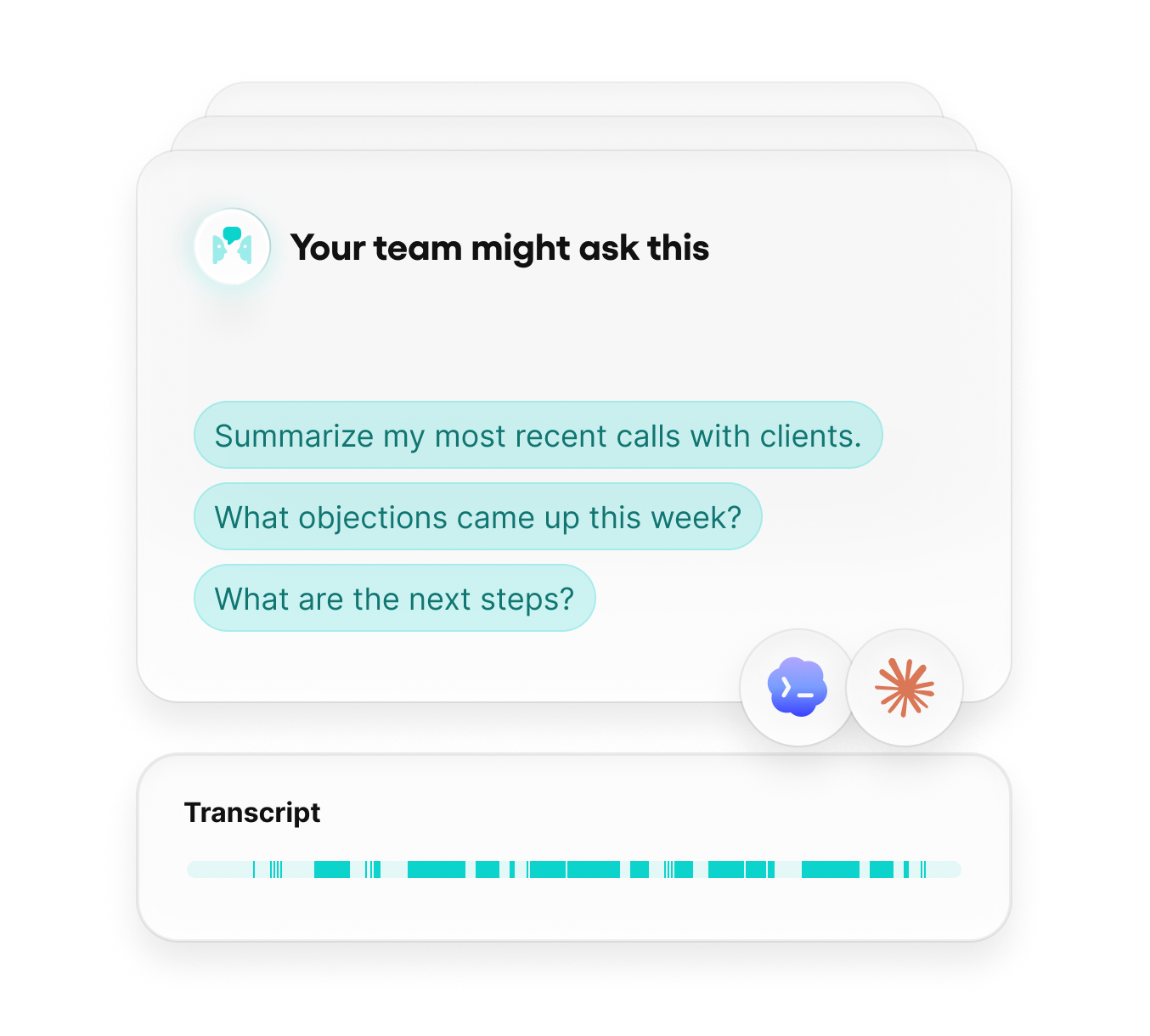
- With Kickscale, you can automatically capture and analyze objections from your sales calls so your team can identify recurring patterns and respond to them more effectively.
What is meant by objection handling?
Objection handling in B2B sales describes how to deal with concerns that a potential customer expresses during the buying process. Objections can relate to the price, the product, or the implementation of the software, for example.
In the first step, you need to understand what the prospect actually means. "Too expensive" can be a genuine budget issue. But it can just as easily mean that the perceived value of your solution is not yet high enough.
Good objection handling helps you bring underlying concerns to light and understand the root cause behind an objection. Only then can you decide how to respond in the conversation.
Want to uncover objections earlier in the conversation?
In an interview with Gerald Zankl, Chris Voss, former FBI negotiator, explains why an early “no” in a sales call can be more valuable than a premature “yes.”
When do objections occur in the sales process?
Objections can occur in any phase of your sales process. A prospect might decline during the very first contact or raise new concerns just before a decision after several conversations.
This is not necessarily a bad sign. An objection shows you that a question has not yet been sufficiently clarified. The crucial thing is that you recognize which phase the objection is occurring in and what you need to clarify for the next step.
Typical phases include:
- Initial contact: The prospect currently sees no reason for a conversation or does not have the time.
- Needs analysis and qualification: There are doubts about whether the problem is significant enough or if your solution is a good fit in principle.
- Demo: The prospect questions features, processes, or the specific value for their use case.
- Proposal and closing: Price, budget, or internal approvals can delay the deal.
Recurring objections are particularly valuable. If your sales team consistently hears the same concerns during a specific phase, you should check whether the problem really lies with individual prospects or if it is originating earlier in the sales process.
What should your mindset be regarding objections?
Objections are a normal part of B2B sales. A "no" does not automatically mean the deal is lost. Often, your prospect is still missing information or evaluates an aspect of your offer differently than you do.
It is therefore important that you do not treat an objection as a personal attack. If you know the value of your product and understand the problem it solves for the customer, you can ask follow-up questions much more calmly.
Just as important: be prepared. If your team hears the same five objections every week, each rep shouldn't have to come up with a new answer on the fly every time.
What should you do when an objection arises?
The worst reaction to an objection is a hasty, canned response. Before you start arguing, you need to understand what is actually bothering the other person.
Listen first
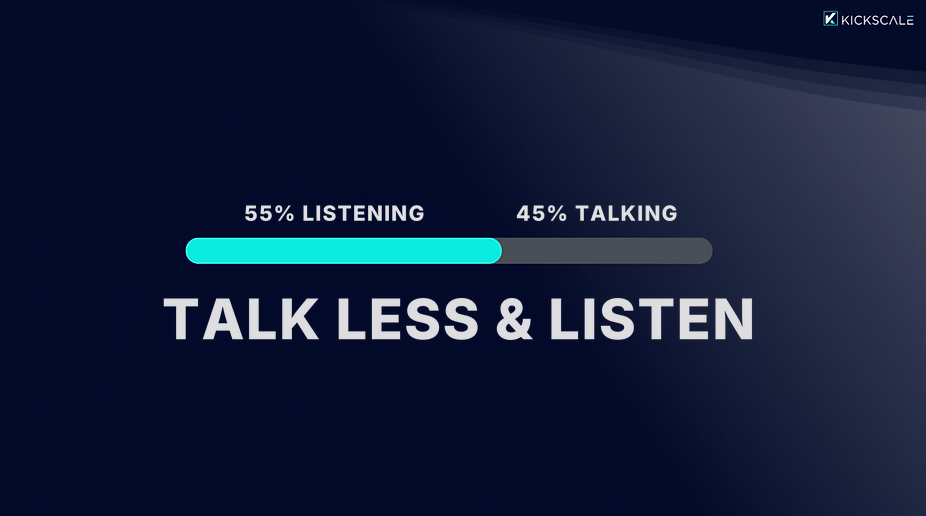
Let your prospect finish speaking and listen with the goal of understanding the objection. If you are already thinking about your counter-argument while they are still talking, you might miss the information you actually need.
It is better to ask an additional question. For example, when you hear "We don't have time for that right now," you can find out whether they mean the implementation of your software, whether internal resources are lacking, or whether the topic simply isn't a priority at the moment.
Prepare for recurring objections
Document the objections your team hears regularly. Add potential follow-up questions and examples from conversations where your team was able to successfully resolve the objection.
This turns "We don't have time" into more than just a sentence your team answers by rote. Your reps get a starting point to find out what the prospect actually means.
Stay calm and let the other person finish speaking
Do not interrupt your prospect. Anyone raising an objection wants the opportunity to explain why they have concerns.
Especially when it comes to price or budget, a hasty justification can come across as defensive. Listen, ask follow-up questions, and only respond once you have understood the context.
Keep the goal of the conversation in mind
Not every objection needs to be fully resolved in the same conversation. In a cold call, your next goal might simply be to secure another meeting. Later in the sales process, it might be about clarifying an open point for an internal decision.
Ask yourself: What needs to be clarified after this conversation for the deal to take a meaningful step forward?
Ask questions before you argue
Do not try to convince your prospect with as many arguments as possible. A good counter-argument is of little use if you are addressing the wrong objection.
The simple rule is therefore:
10 objection handling techniques
There is no single answer that works for every prospect. Which technique makes sense depends on the objection raised and what is actually behind it.
These ten approaches will help you consciously choose your response during a conversation:
- Show empathy: Show your prospect that you have understood their objection before you respond to it.
- Verify if it is an objection or a pretext: Find out if the statement provided is actually the reason for their hesitation.
- Go back to needs analysis: Check whether an important need or context has not yet been sufficiently clarified in the conversation so far.
- Check the next step anyway: An objection doesn't have to mean the end of the conversation. Determine if a productive next step is possible.
- Use the boomerang method: Take the objection and see if that exact point can actually be an argument in favor of your solution.
- Use a relevant story: Use a comparable customer case to show how a similar objection was resolved.
- Translate the objection into a request: An objection often hides a specific expectation. Find out what it is.
- Question the perspective: Work with your prospect to examine the assumptions their assessment is based on.
- Ask why: A targeted follow-up question can help you move from the initial statement to the actual root cause.
- Embrace the silence: You don't have to fill every pause in the conversation immediately. Give the other person time to flesh out their thoughts.
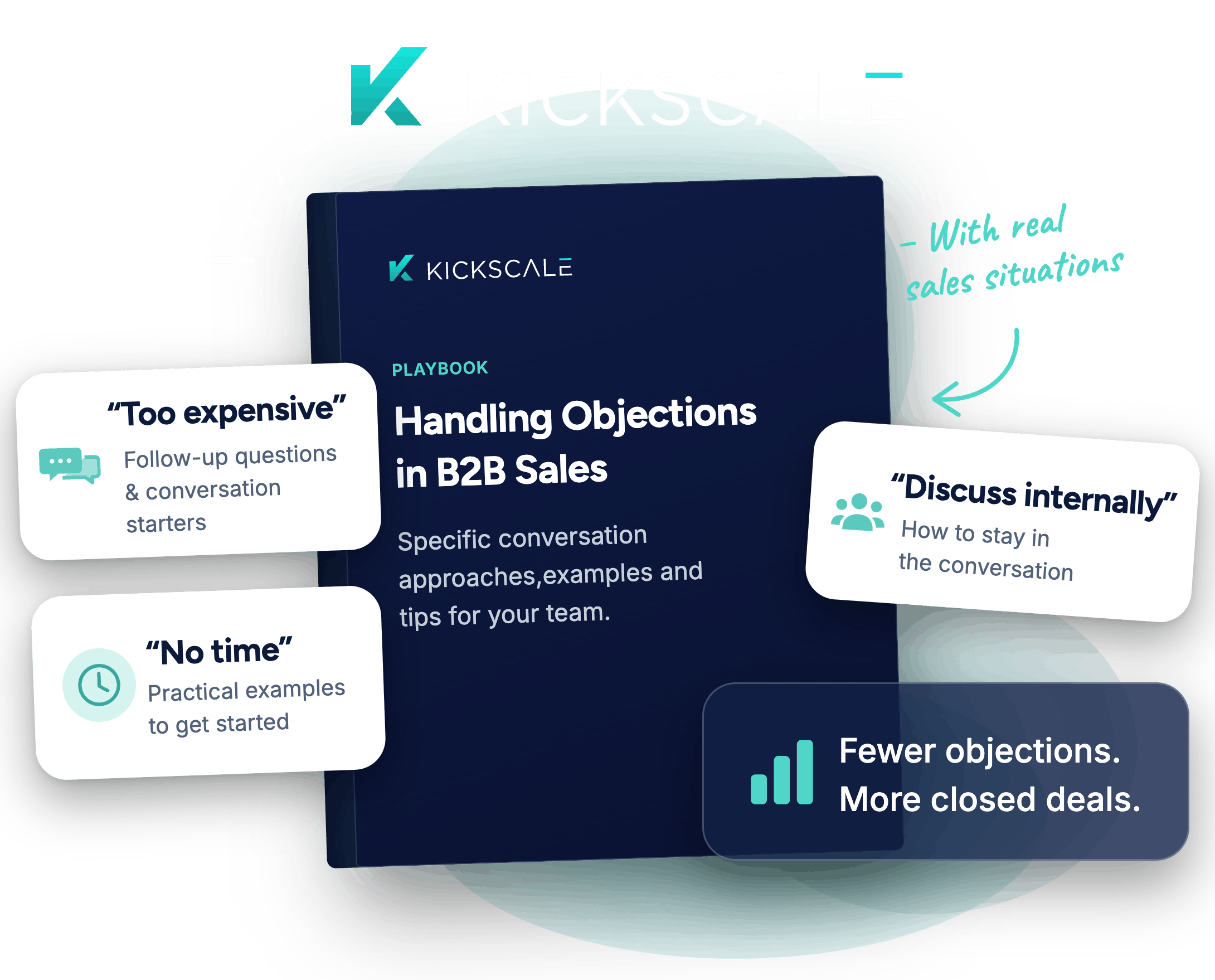
If you would like to practice these techniques using real-world sales scenarios, you can find further examples and conversation approaches for your team in our objection handling playbook.
How do you use the 10 techniques correctly in a conversation?
The right response depends on what’s really behind an objection. In our playbook you’ll find concrete sales situations, conversation approaches and examples for your team.

Handling Objections: Frequently Asked Questions
What is the difference between an objection and a stall?

An objection describes a specific concern that stands in the way of a purchasing decision. A pretext, on the other hand, can be a superficial excuse used while the actual reason remains unstated. For this reason, you should ask targeted questions when faced with vague statements before responding with arguments.
This is some text inside of a div block.
What are the most common objections in B2B sales?
Common objections involve price and budget, lack of priority, internal resources, or the perceived value of a solution. Which objections your team hears most often depends heavily on your product, target audience, and sales process.
This is some text inside of a div block.
How do I identify the real reason behind an objection?
Ask open-ended questions and avoid leading the prospect to a specific answer. Statements like "it's too expensive" only become actionable once you understand what the prospect is comparing the price to and what value they feel is currently missing.
This is some text inside of a div block.
Should I address every objection immediately?
No. Sometimes you lack information or another person needs to be involved in the decision. It is more important to document the objection and ensure there is a clear plan for how it will be addressed in the ongoing sales process than to provide a quick answer.
This is some text inside of a div block.
How can Kickscale help with objection handling?
Kickscale analyzes sales calls and identifies recurring objections. This allows you to see which concerns arise most frequently based on actual customer conversations and pinpoint exactly where your team needs support.
This is some text inside of a div block.
How can sales teams use Kickscale to practice objection handling?
Teams can use real conversation data to analyze recurring objections and how individual reps respond to them. This makes coaching more grounded in actual sales calls rather than hypothetical scenarios.
This is some text inside of a div block.
How do I build an objection handling guide for my sales team?
Start with real objections from your past conversations and group similar statements by their underlying cause. Add relevant follow-up questions, context, and conversation examples for each objection so your reps don't have to memorize rigid scripts.
This is some text inside of a div block.
Markus is the co-founder and CMO of the Vienna-based scaleup Kickscale, which develops AI-powered revenue intelligence technology for European sales teams. Before founding Kickscale, Markus started as one of the first SDRs at Bitmovin and rose to become Head of Global Digital Marketing, where he played a key role in establishing the video streaming company as a global market leader.




Your sales team deserves clarity instead of guessing games
With our AI revenue intelligence platform, we help innovative sales teams make better decisions and close more deals.
Data-driven better pipeline decisions.
Latest articles for sales leaders who want to improve the quality of their CRM data, forecasts, and revenue operations.




Your sales team deserves clarity instead of guessing games
With our AI revenue intelligence platform, we help innovative sales teams make better decisions and close more deals. Experience the difference:

Deep customer understanding
Identify why customers buy or what prevents them from doing so – from all conversations

Objective forecasts
Finally make decisions based on hard facts instead of gut feeling

Deal prioritization
Focus your team on the opportunities with the highest potential