How Top Salespeople Improve Themselves | Sales Coaching


What really works in sales?
We took a look at 20,000 sales calls.
Today, we’re showing you how Europe’s best salespeople use Kickscale.
Here is what we noticed:
There are a few key things that top salespeople have in common.
They have identified several tactics that they use time and time again.
Let’s start with the first one:
INVEST IN YOURSELF
Top salespeople live by these rules:
- Know yourself – What are your strengths and weaknesses?
- Less is more – Focus on behavioral changes that lead to more revenue.
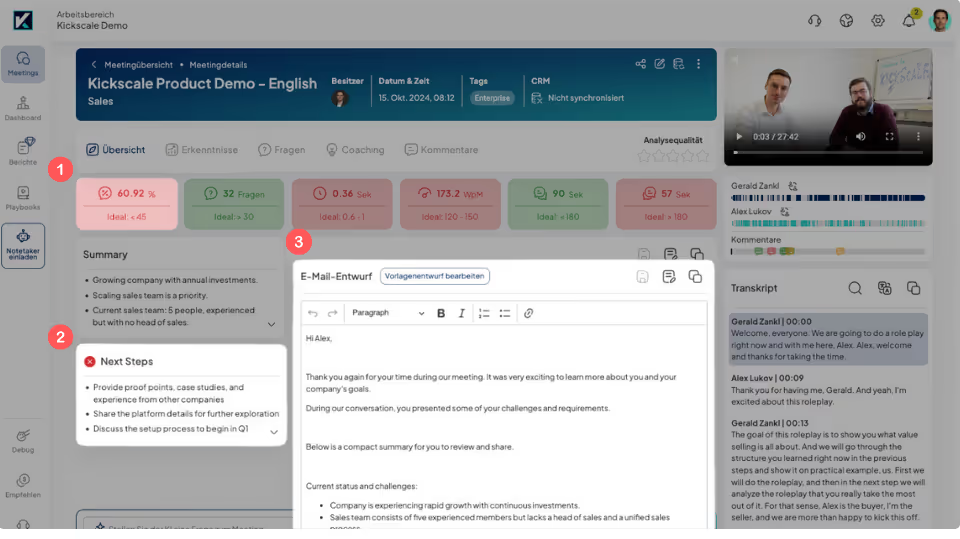
Kickscale helps you identify your strengths and weaknesses.
In other words, by measuring your behavior.
But if you want to reach your full potential, you should follow the tips from top salespeople. We’re sharing them with you now.
#1 Information = Power | Extract key information from the person you're talking to
The more you know about a potential customer, the better you can understand their needs and solve their problems.
How do top salespeople achieve this?
They focus on the quantitative metrics displayed after every meeting.
The most important metric? The customer monologue.
Top salespeople try to keep the customer's monologue going for as long as possible.
They achieve this by strategically influencing the initial metrics.
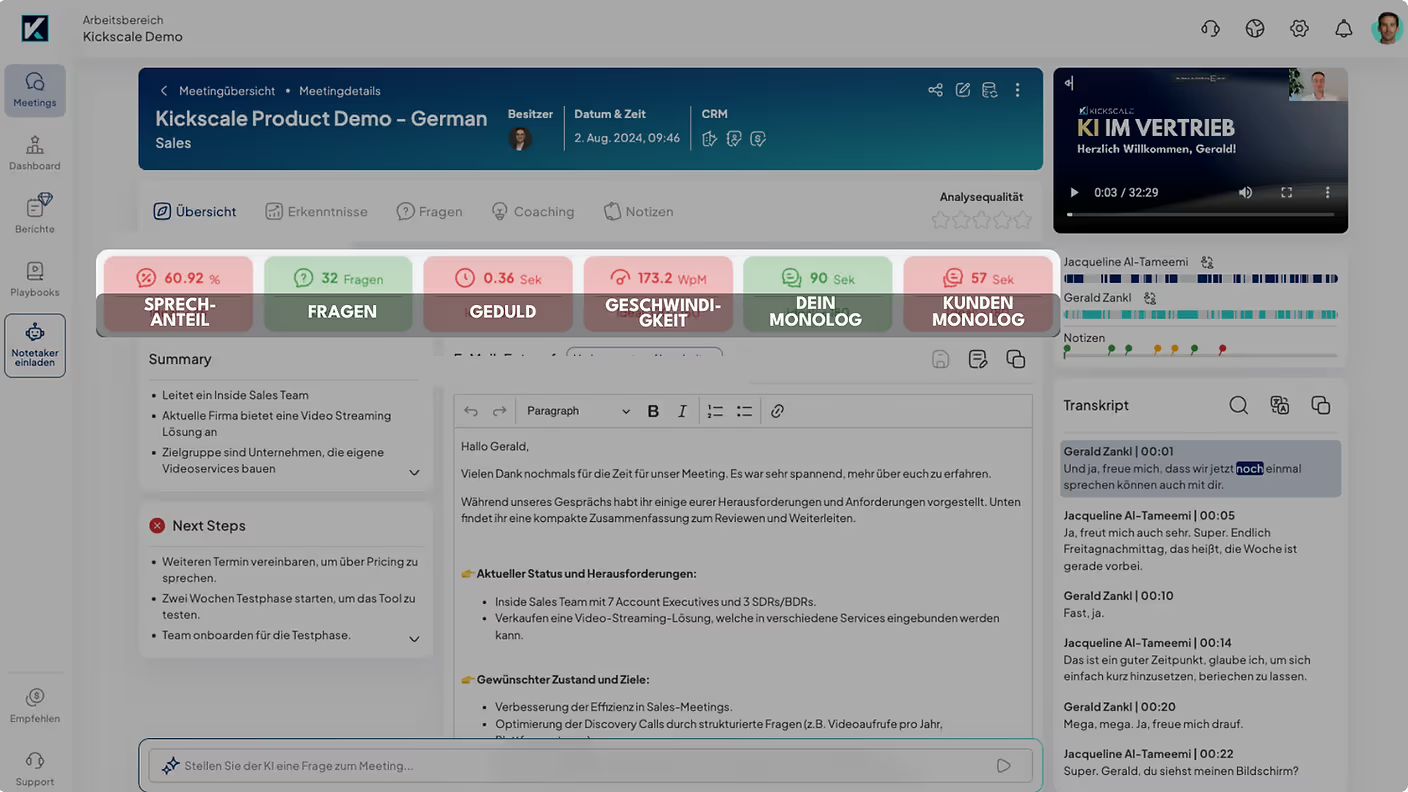
- Talk less, listen more: There is a reason we have one mouth but two ears. This ratio speaks for itself—listening is incredibly powerful.
- Ask open-ended questions: Start questions with Who, What, Where, Tell me about…, Explain to me… . These questions encourage longer, more insightful answers than closed-ended questions.
You can find examples at the end of this post.
- Be patient: Consciously take pauses to give the prospect time and space to respond.
- Speak slower: Don't rush. Speak slowly and calmly.
- Shorten your monologue: The less you speak, the more the customer feels heard and valued.
- Encourage the customer to talk more: Your goal must be a long and meaningful customer monologue .
📌 The secret:
Never dominate the conversation.
Top salespeople treat sales calls like a real conversation—almost like a dance. One partner speaks, and then the other follows.
Here is how you can measure this in the app: (Pay attention to this in your next call)
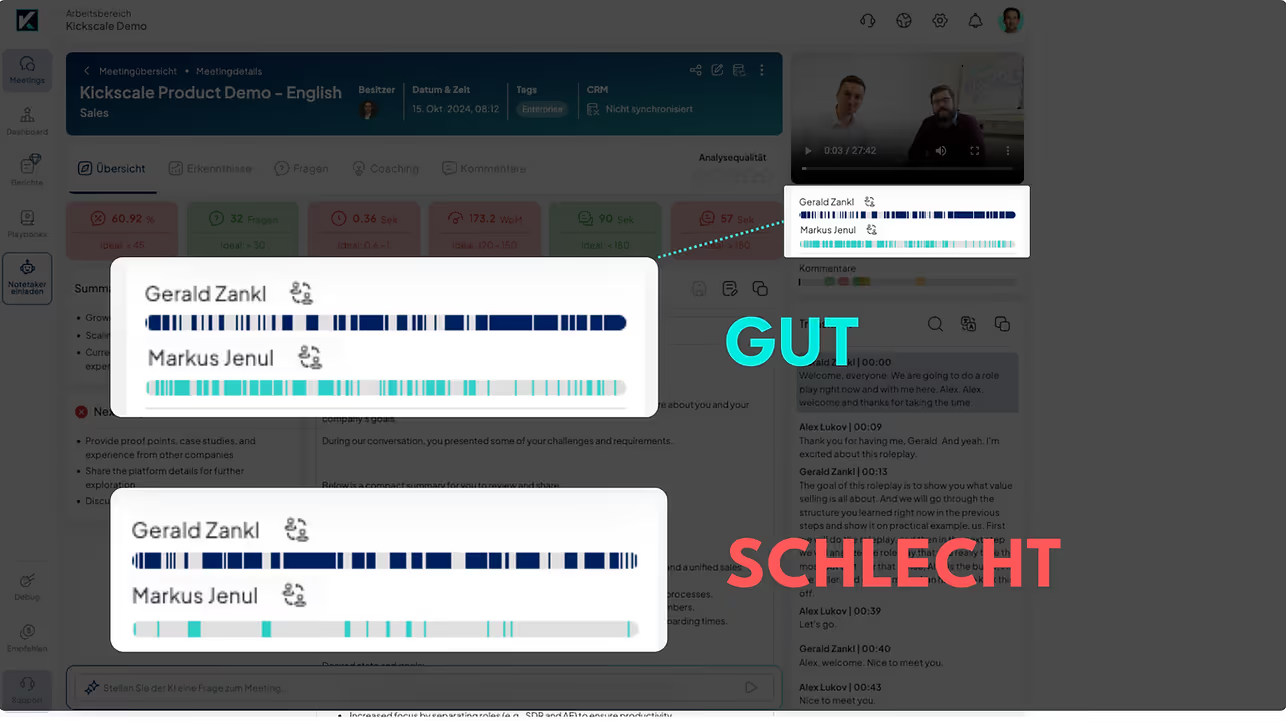
Do you see the difference?
If the potential customer isn't given enough room to talk, the conversation becomes one-sided and less effective.
You can avoid this by following the rules mentioned above.
They are simple, but…
...they work.
#2 Structure is key
Successful salespeople don't improvise.
They follow a clear structure.
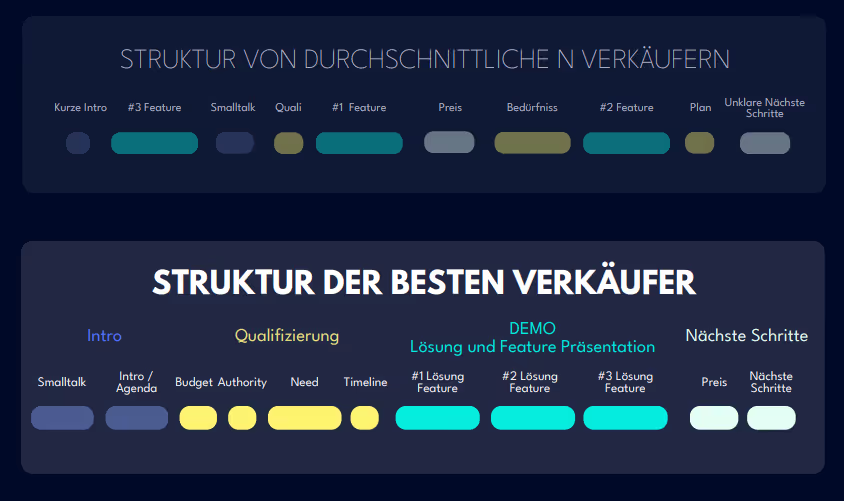
Do you recognize the difference between an average salesperson and a top performer?
Always remember: Less is more.
Here is how the best do it:
- Identify up to three challenges your counterpart is facing (using targeted questions)
- Present the most important feature for your counterpart first.
And we will show you exactly how now:
- Clearly highlight the problem: Explain the specific issue the feature solves.
- Then, briefly introduce the feature.
- Quantify the impact: Show success metrics such as: "Our client X saved Y% in costs."
- Ask a gap question: Encourage reflection by asking questions like: "How does that compare to your current way of working?"
Try it out yourself in your next conversation.
You can then make your conversation structure measurable and improve it step by step with the help of Kickscale.
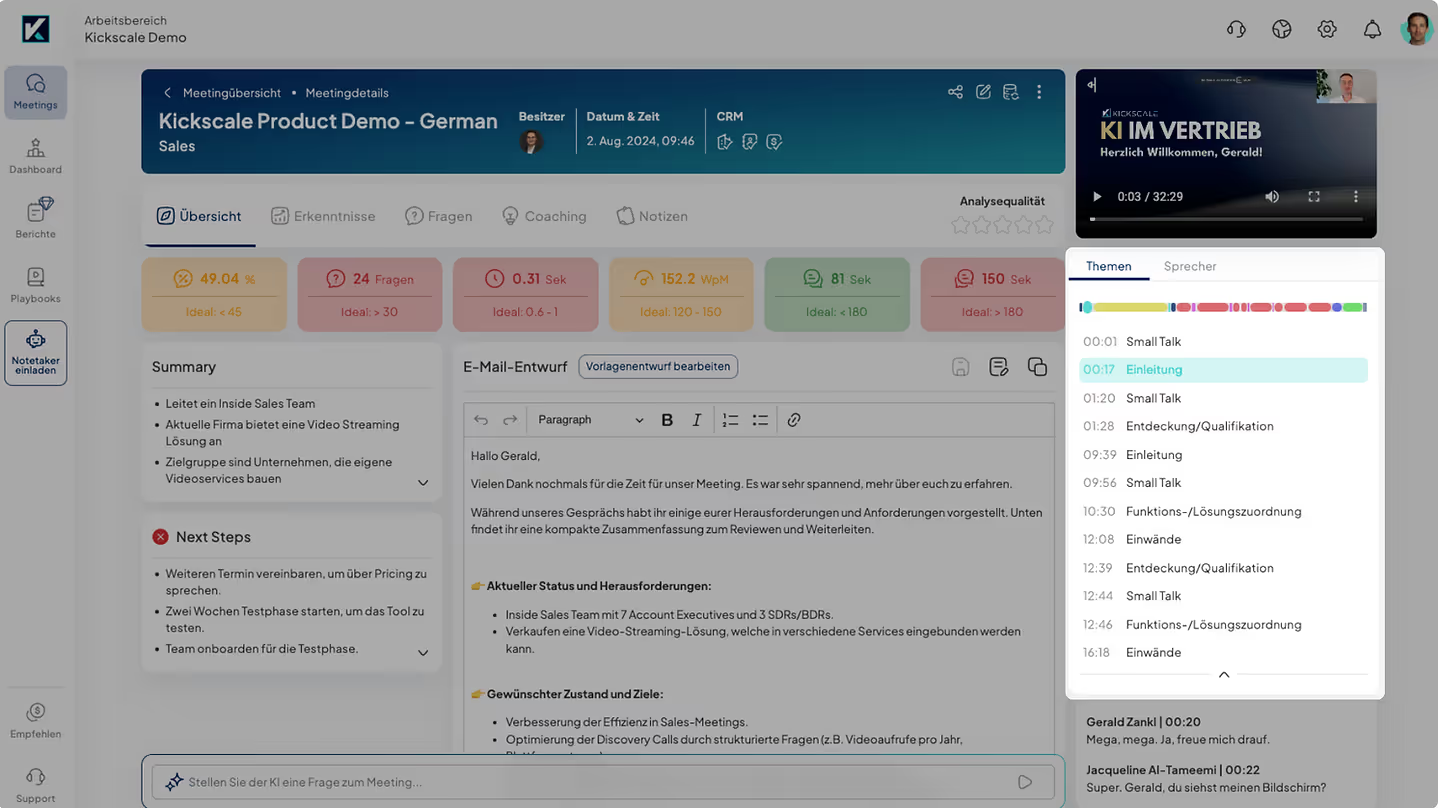
The next point is often underestimated, even though it is incredibly effective:
What are your next steps?
This point is one of the most important, yet it is often forgotten.
#3 Provide clear next steps
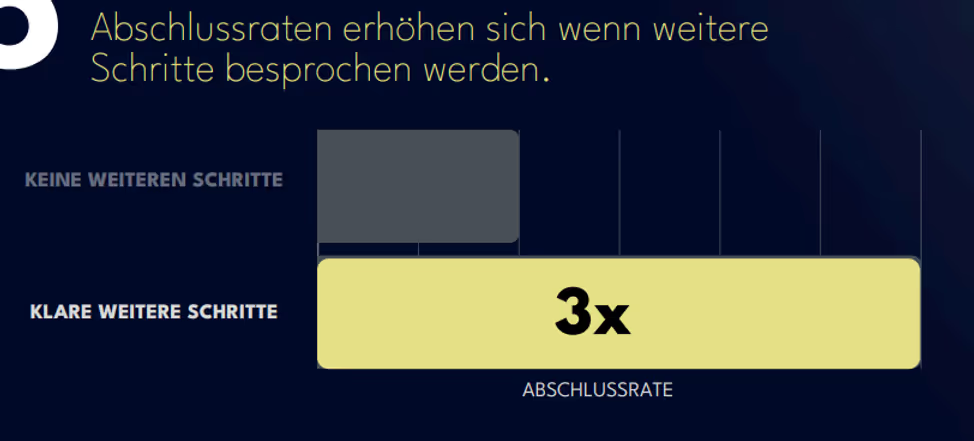
Be specific:
End every sales call with a scheduled follow-up appointment.
Top salespeople even plan this during the conversation, leaving no room for uncertainty.
Most people worry about the future.
We appreciate it all the more when someone takes us by the hand and shows us the way.
That is why concrete, clear, and confidently communicated steps are so important.
If you aren't using these yet, it's time to make it a habit.
Pay attention to your next steps in your next conversation.
Top salespeople know which steps are effective
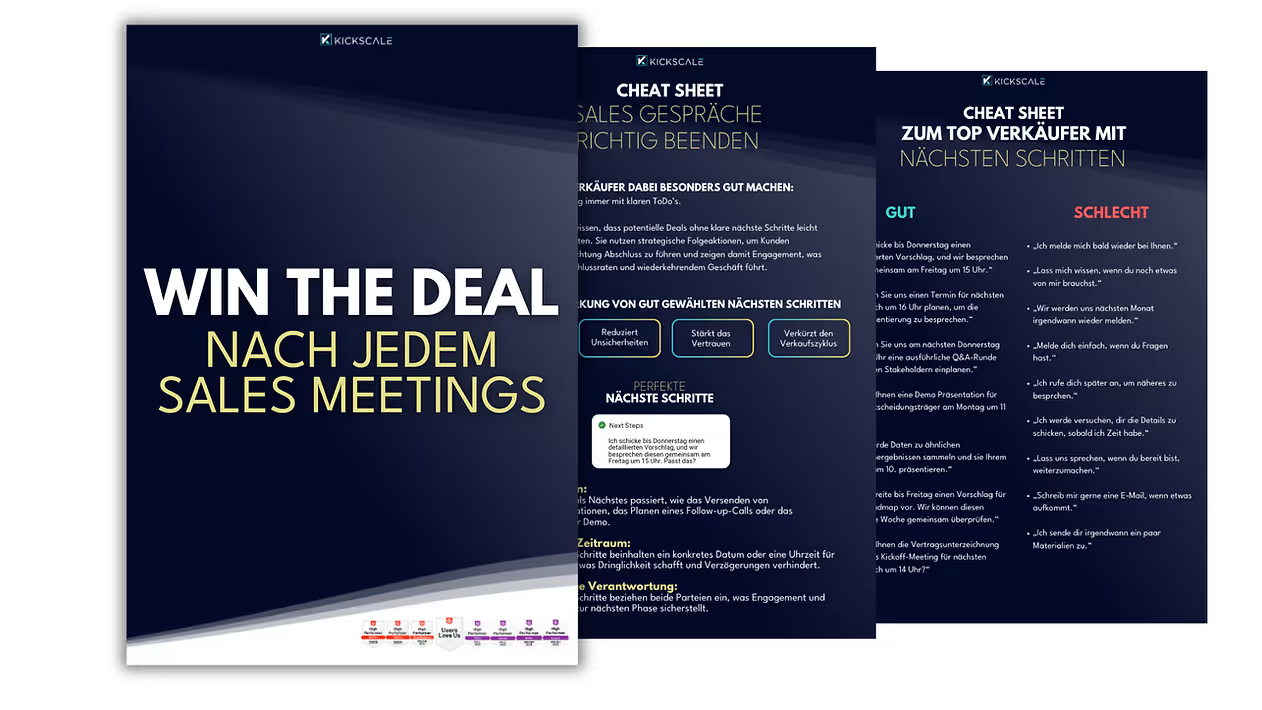
Follow these principles:
- Concrete action: Clearly describe the next steps, e.g., sending a proposal, scheduling a follow-up call, or setting up a demo.
- Defined timeline: Set a specific date and time for the follow-up. This creates urgency and helps avoid delays.
- Mutual accountability: Ensure both parties are committed and ready to move to the next phase. Involve the prospect in the process.
See below:
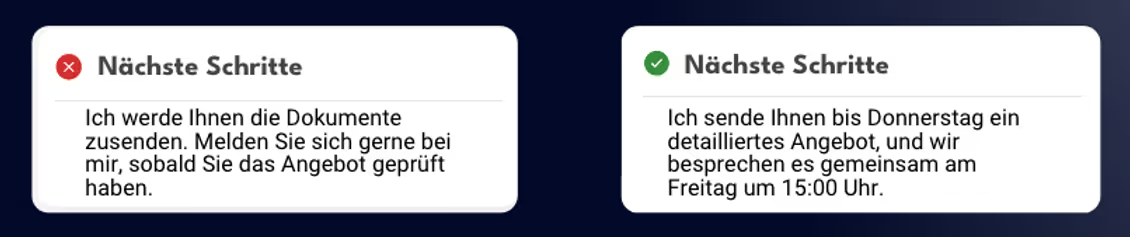
Good next steps have the following impact:
- They create a sense of urgency
- Reduce uncertainty
- Build trust
- Shorten the sales cycle
Here are 10 examples from top salespeople
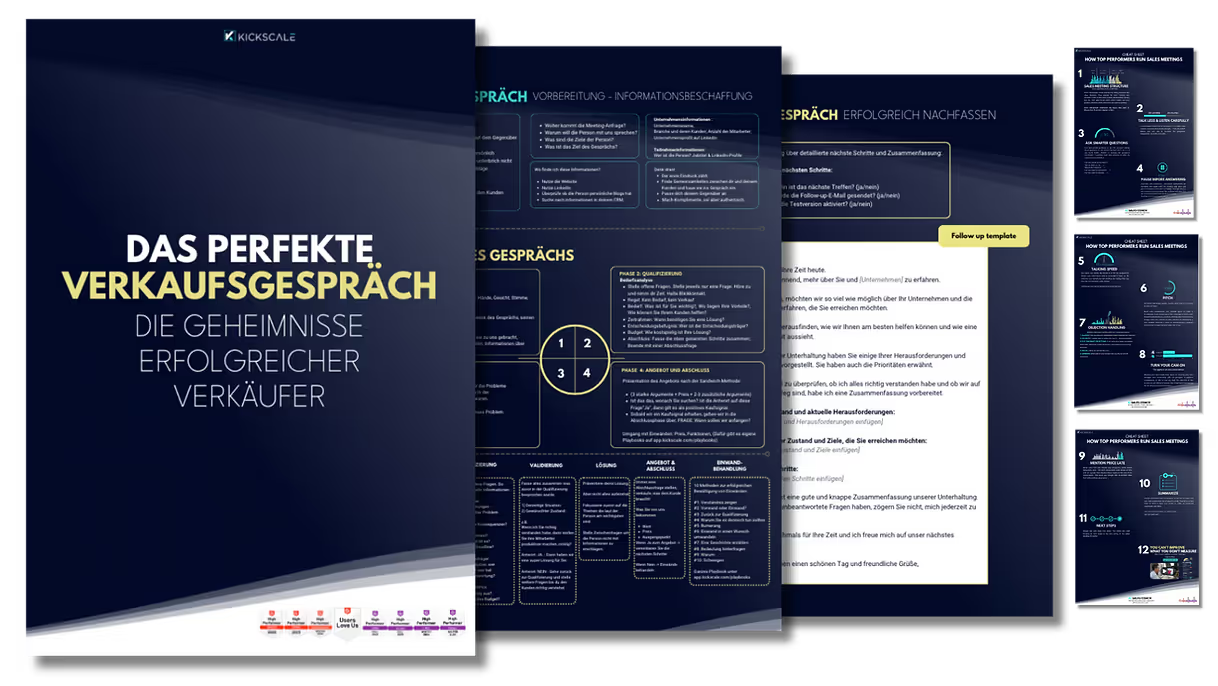
Here are some additional resources to help you with your sales:


This is some text inside of a div block.
This is some text inside of a div block.
This is some text inside of a div block.
This is some text inside of a div block.
This is some text inside of a div block.
This is some text inside of a div block.
This is some text inside of a div block.
Markus is the co-founder and CMO of the Vienna-based scaleup Kickscale, which develops AI-powered revenue intelligence technology for European sales teams. Before founding Kickscale, Markus started as one of the first SDRs at Bitmovin and rose to become Head of Global Digital Marketing, where he played a key role in establishing the video streaming company as a global market leader.




Your sales team deserves clarity instead of guessing games
With our AI revenue intelligence platform, we help innovative sales teams make better decisions and close more deals.
Data-driven better pipeline decisions.
Latest articles for sales leaders who want to improve the quality of their CRM data, forecasts, and revenue operations.
.png)
.png)

Your sales team deserves clarity instead of guessing games
With our AI revenue intelligence platform, we help innovative sales teams make better decisions and close more deals. Experience the difference:

Deep customer understanding
Identify why customers buy or what prevents them from doing so – from all conversations

Objective forecasts
Finally make decisions based on hard facts instead of gut feeling

Deal prioritization
Focus your team on the opportunities with the highest potential