Small talk in B2B sales: When it works, when it hurts
An analysis of 616,545 sales calls shows that small talk works, but only at the right time. Here is the pattern.


The first 90 seconds of a sales call often matter more than many sellers care to admit. Not because you win the deal in that time, but because you learn what the conversation is likely to become. Small talk is the instrument for this. Whether it works depends not on the topic, but on what the prospect reveals through their response.
Kickscale has now analyzed 616,545 sales calls for our Research Hub. The pattern that emerges is clear: small talk is not a universal icebreaker. It is a context-dependent tool with varying potential depending on the deal stage.
What small talk in sales is really meant to achieve
Small talk is a brief, casual conversation used to gauge the tone, mood, and openness of the person you are speaking with. Anyone who thinks it is about quickly making yourself liked is missing the point. In sales, it is about something more concrete: does this person want to connect on a personal level right now, or would they prefer to get straight to business?
The answer to this question is valuable information. It reveals the buyer's communication style, signals their current level of openness, and helps the seller set the right pace for the start of the call. In doing so, small talk creates the foundation for better information and more open conversations, especially in the DACH market, where initial meetings can quickly become very formal.
Small talk potential by deal stage
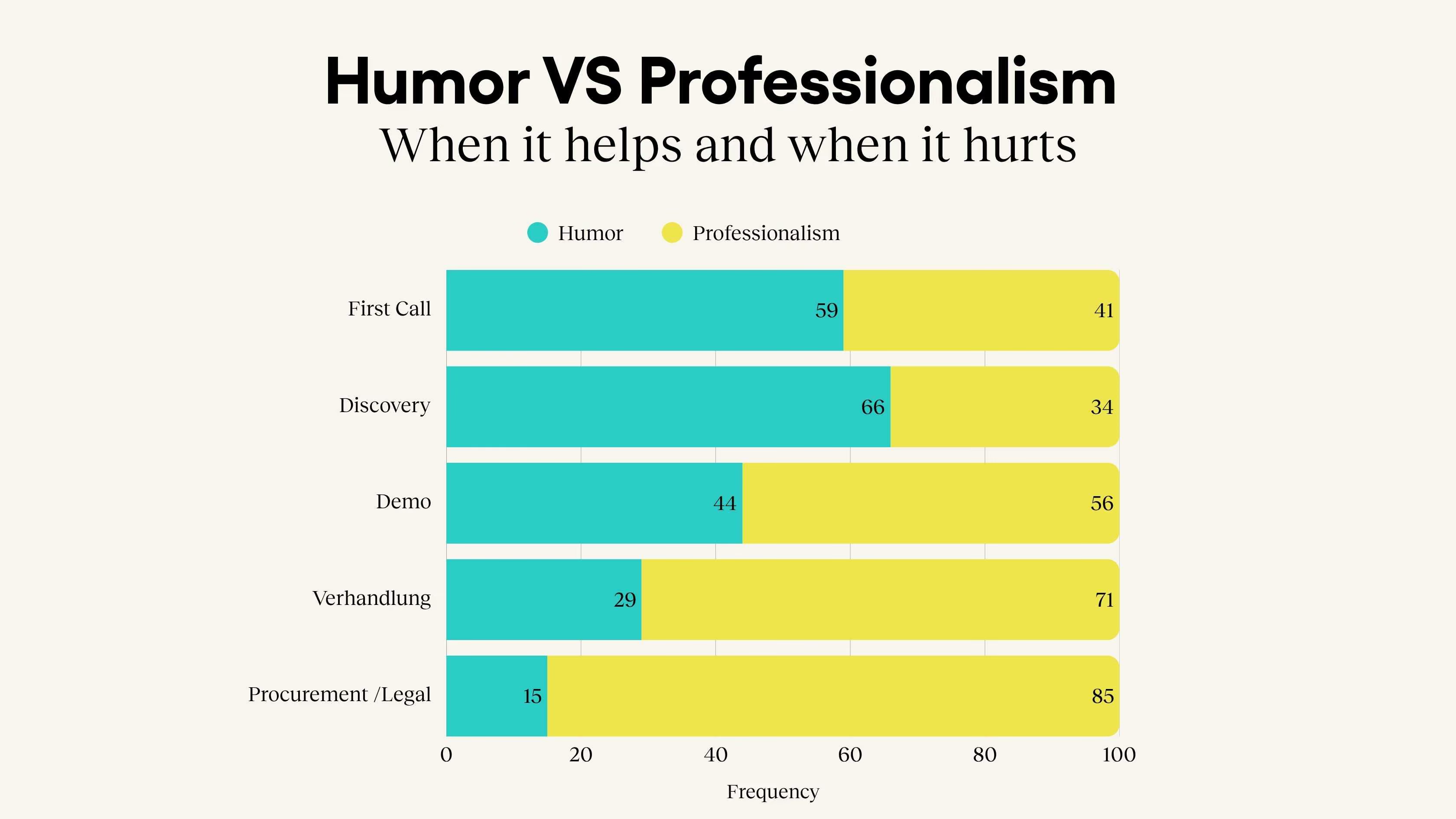
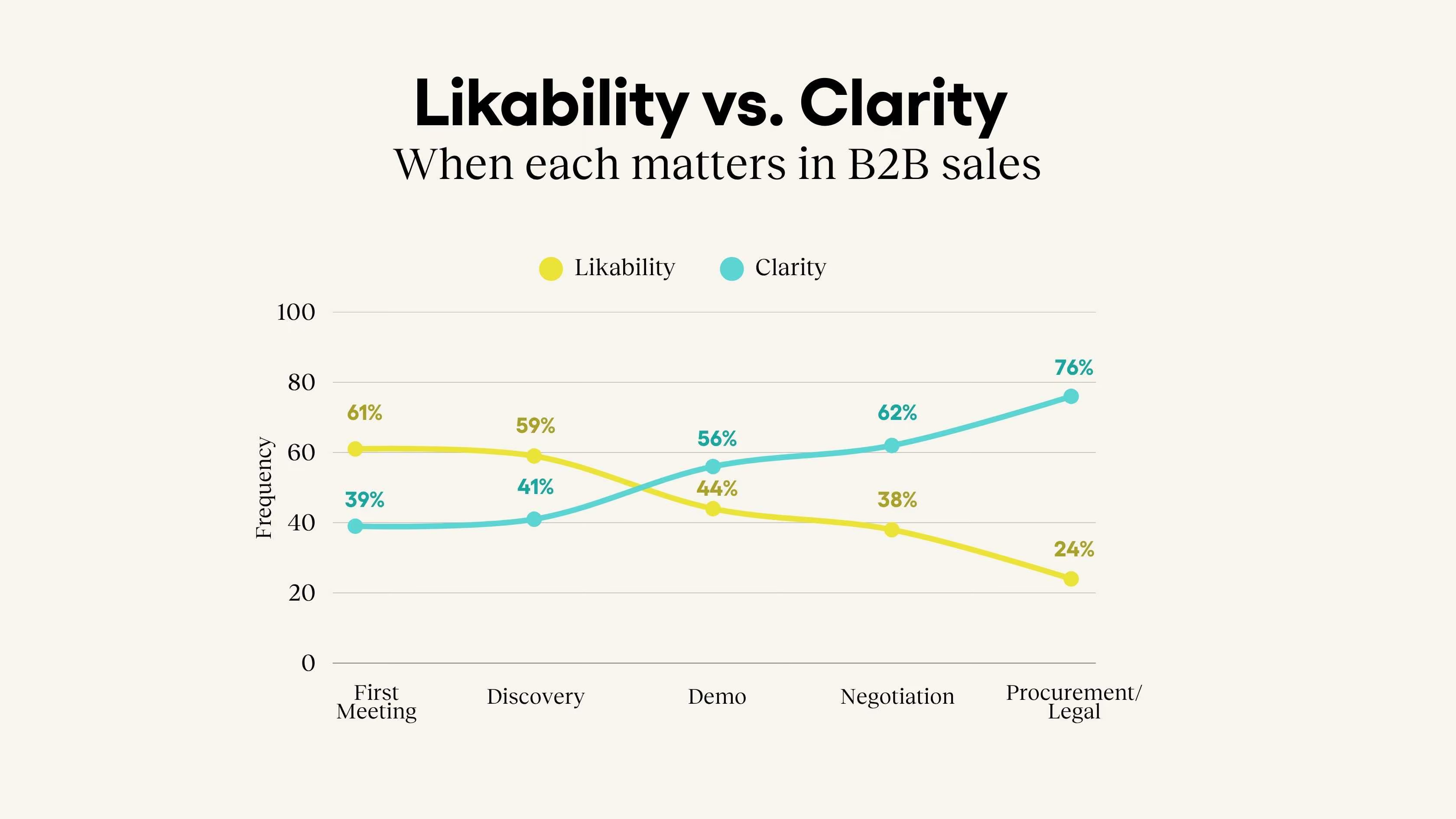
Not every stage of the sales process offers the same amount of room for personal exchange. The analysis of the calls shows a clear trend.
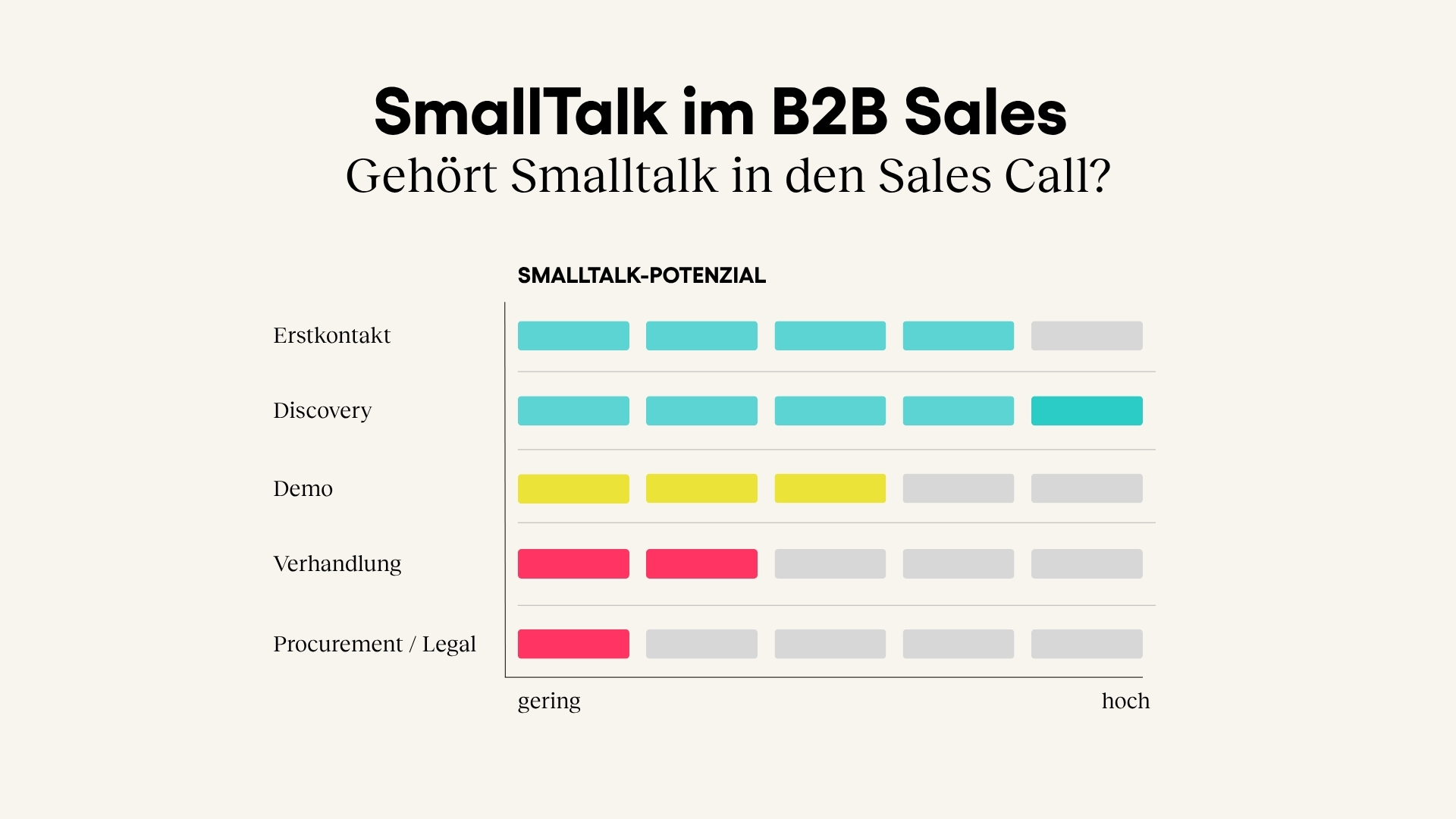
Initial contact: high potential.
Two strangers are meeting for the first time. Small talk can reduce formal distance and reveal how openly the other person wants to communicate. A practical example: "My morning was dominated by a broken coffee machine. I hope yours got off to a better start." If the buyer responds openly or with humor, the conversation can continue briefly. If you only get a polite "Yes, thanks," move on to the agenda. That is exactly the information that counts.
Discovery: highest potential.
Before buyers speak openly about problems and uncertainties, they need to feel comfortable in the conversation. Small talk during discovery is therefore not a social reflex, but a targeted preparation. "You just got back from vacation? What was harder: the trip home or the first look at your inbox?" The reaction to this immediately shows how personal the conversation can get and how deep you can really dig during discovery.
Demo: medium potential.
The relationship is already established. Small talk works particularly well here when it picks up on a specific detail from the last conversation, for example: "You were planning to run your first half-marathon over the weekend. How did it go?" This signals: I am not just thinking about the deal, but also about the person. Generic small talk without a personal connection, on the other hand, quickly feels like a box-ticking exercise.
Negotiation: low potential.
A brief personal opening can reduce tension. After that, however, clarity, commitment, and respect for the buyer's time are what count. Anyone who dwells on personal matters for too long here risks creating the opposite of trust.
Procurement and Legal: very low potential.
Here, trust is built primarily through precision. A friendly greeting is enough. After that, it should go straight to the open points.
The crucial skill: reading and letting go
The right question isn't whether small talk belongs in a sales call. The right question is when it belongs there. And that requires a skill many sellers underestimate: reading the reaction.
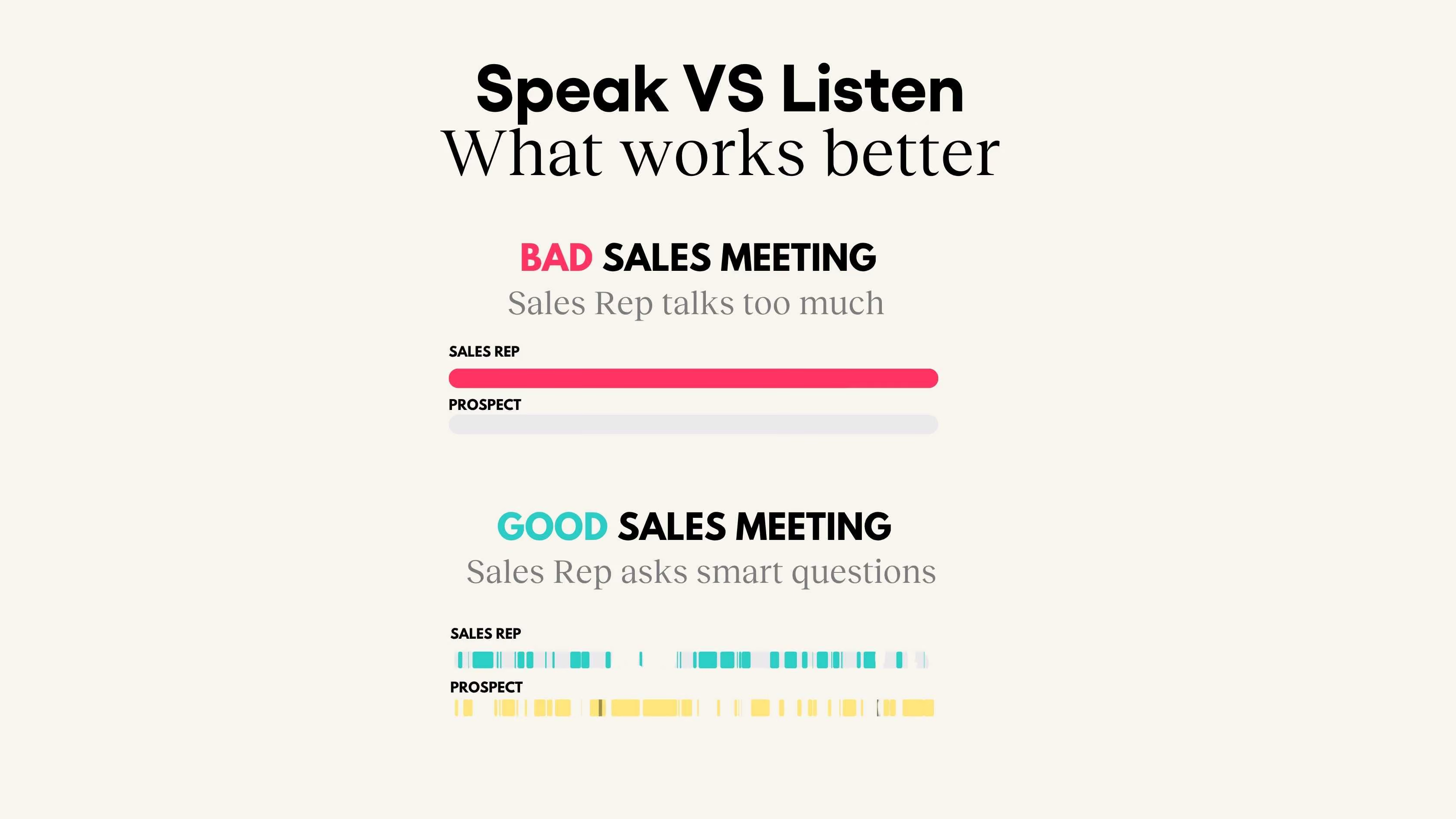
It’s not the topic that makes for good small talk. What makes the difference is the willingness to react to what the buyer reveals in their response. Are they opening up? Keep going. Are they being brief? Stick to the agenda.
Good sellers know not only when to ask follow-up questions, but also when to stop. This sounds simple, but in practice, it is one of the most difficult micro-decisions in a conversation. AI-powered call analysis can help: those who regularly receive feedback on how buyers react to their opening lines develop this intuition much faster.




Your sales team deserves clarity instead of guessing games
With our AI revenue intelligence platform, we help innovative sales teams make better decisions and close more deals.
More insights from the Research Hub
Latest benchmarks and studies for data-driven revenue teams.