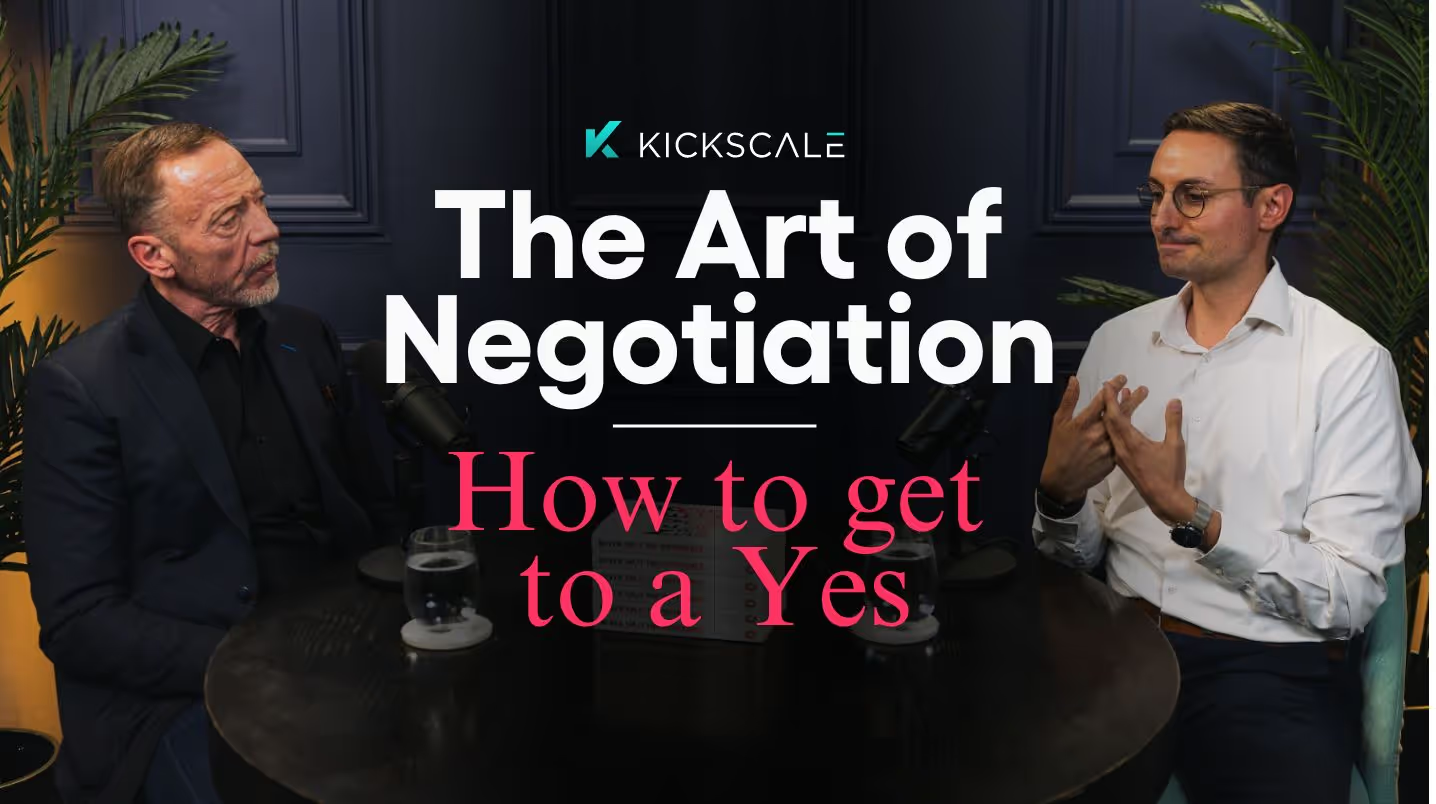
Why top salespeople hunt for the "no" to get to "yes" – Interview with FBI negotiator Chris Voss

The counterintuitive negotiation tactic used by the best salespeople
I recently had the opportunity to speak with Chris Voss… the former FBI hostage negotiator who now teaches sales teams around the world how to close deals. What he told me completely turned conventional sales wisdom on its head.
"Unspoken negative emotions never go away," says Chris. And if that sounds dramatic coming from someone who has negotiated with kidnappers and hostage-takers, it should—because these hidden objections are exactly what cause your deals to fizzle out.
The "Happy Ears" problem
Most sales reps I’ve worked with are naturally optimistic. They want to hear "Yes." They avoid conflict. They stay positive and build rapport. All good things, right?
Not according to Chris.
"Salespeople are always very nice," he explained. "In our heads, we always want to hear the 'Yes.' But every negotiation starts with a 'No.' You need to get more value out of that."
Here is what he means: While your sales rep is being nice and building trust, the prospect already has a "No" in their head. They are skeptical. They are already working with a competitor. They are busy. That "No" exists whether you acknowledge it or not.
Overcome your fear of "No"
When I asked Chris what sales teams should do differently, his answer was direct:
"Overcome your fear of 'No.' Most people think 'Yes' means success and 'No' means failure... so they avoid it. But all communication and empathy are about the other side, not you."
That hit home for me. At Kickscale, we analyze thousands of sales calls, and the pattern is clear: deals stall when objections remain unspoken. The prospect is polite, accepts the meeting, says they will "think about it"... but nothing moves forward because the real concerns were never addressed.
What this looks like in practice
Top sales reps don't wait for objections to surface. They name them proactively:
Instead of: "Shall we proceed with a demo?"
They say: "You’re probably thinking that this sounds expensive and that your team is already overloaded with tools they have to learn. That’s what we hear from most sales leaders."
Instead of: "Let me tell you why we are the best solution..."
They say: "It sounds like you’ve been disappointed by platforms like ours before. What exactly went wrong last time?"
This approach achieves something crucial:
It gives the prospect permission to voice their genuine concerns. And once those concerns are out in the open, you can actually have a productive conversation about whether your solution makes sense.
Why this matters for European sales teams
In our work with B2B software companies across DACH, the UK, the Netherlands, and Northern Europe, we have seen this time and again. European buyers value directness and transparency. They appreciate it when you address the elephant in the room—whether it’s pricing, GDPR compliance, or implementation complexity.
The sales teams that close the fastest are the ones that bring objections to light early: "Before we go any further, we start at €89 per user/month. If that is completely outside your budget, let’s not waste our time."
The bottom line
Chris Voss learned this lesson in the most extreme situations imaginable: unspoken negative emotions never disappear. That is exactly why they are so dangerous for your deals.
The best sales conversations confront negative emotions. They give prospects permission to say "no," so you can understand what that "no" really means and whether your solution is actually the right fit.
Want to hear the full conversation? Chris explains exactly how to implement this approach, shares specific scripts for uncovering objections, and reveals the psychology behind why it works in high-stakes negotiations.
👉 Go to the full interview with Chris Voss
👉 Ready to put Chris's advice into practice? Start by analyzing your sales calls with Kickscale. See exactly when objections arise, track your talk-to-listen ratio, and identify patterns that close deals. Sign up here

This is some text inside of a div block.
This is some text inside of a div block.
This is some text inside of a div block.
This is some text inside of a div block.
This is some text inside of a div block.
This is some text inside of a div block.
This is some text inside of a div block.
Gerald Zankl is a sales expert with over 10,000 sales calls under his belt. He is the founder and CEO of the Vienna-based startup Kickscale, which develops an AI coach and assistant for analyzing and automating customer conversations. Previously, the Carinthia native served as Director of Global Inside Sales at Bitmovin, where he helped the company grow from 7 to over 200 employees.
He lives in Austria with his wife and daughter and is the international best-selling author of The Sales Skills Book.




Your sales team deserves clarity instead of guessing games
With our AI revenue intelligence platform, we help innovative sales teams make better decisions and close more deals.
Data-driven better pipeline decisions.
Latest articles for sales leaders who want to improve the quality of their CRM data, forecasts, and revenue operations.




Your sales team deserves clarity instead of guessing games
With our AI revenue intelligence platform, we help innovative sales teams make better decisions and close more deals. Experience the difference:

Deep customer understanding
Identify why customers buy or what prevents them from doing so – from all conversations

Objective forecasts
Finally make decisions based on hard facts instead of gut feeling

Deal prioritization
Focus your team on the opportunities with the highest potential