Sales Automation | GDPR-compliant & AI-powered

Sales automation refers to the use of software that automatically executes repeatable sales tasks, captures data at the source, and keeps CRM systems up to date without manual maintenance. In 2026, sales automation combines workflow logic with AI layers for conversation and revenue intelligence, while simultaneously meeting the requirements of the GDPR and the EU AI Act.
Sales Automation: The essentials
- Sales automation handles repetitive sales tasks such as CRM maintenance, lead routing, follow-up sequences, and meeting documentation.
- A full-featured sales automation platform combines classic trigger workflows with AI capabilities for transcription, pain-point analysis, forecasting, and automated coaching based on actual customer conversations.
- In 2026, the GDPR, EU AI Act, and Data Act are shaping tool selection in the DACH region. Key evaluation criteria include hosting, sub-processors, security certifications, and data exports.
- Kickscale is a revenue intelligence platform developed for the DACH market and hosted in the EU, combining sales automation with ISO 27001 certification, automated CRM maintenance, and AI-powered forecasts derived from real customer interactions.
What is sales automation?
Sales automation consists of two classic pillars: automatically capturing and updating customer data, and triggering follow-up actions based on predefined events in the sales process.
The difference compared to purely rule-based sales automation lies in the depth of analysis. While rule-based systems wait for explicit triggers, an AI layer analyzes the content of the conversation itself. It identifies pain points, objections, and missing next steps, suggesting the appropriate follow-up action to the rep.
It is important to distinguish this from marketing automation. Marketing automation works on top- and mid-funnel campaigns, lead nurturing, and scoring before the lead is handed over. Sales automation takes over from the moment a lead is passed to sales and supports the process through to closing or renewal.
Which sales tasks can you automate with sales automation?
In sales, there are clear tasks that can be fully automated and others that must always remain in the hands of the rep. An honest assessment at the start prevents you from over-automating your sales process and risking customer trust.
You should consciously avoid automating discovery, negotiations, and escalations with critical customers. These moments are decisive for building trust and protecting margins, and this is exactly where the time you save elsewhere pays off.
How does a sales automation process work?
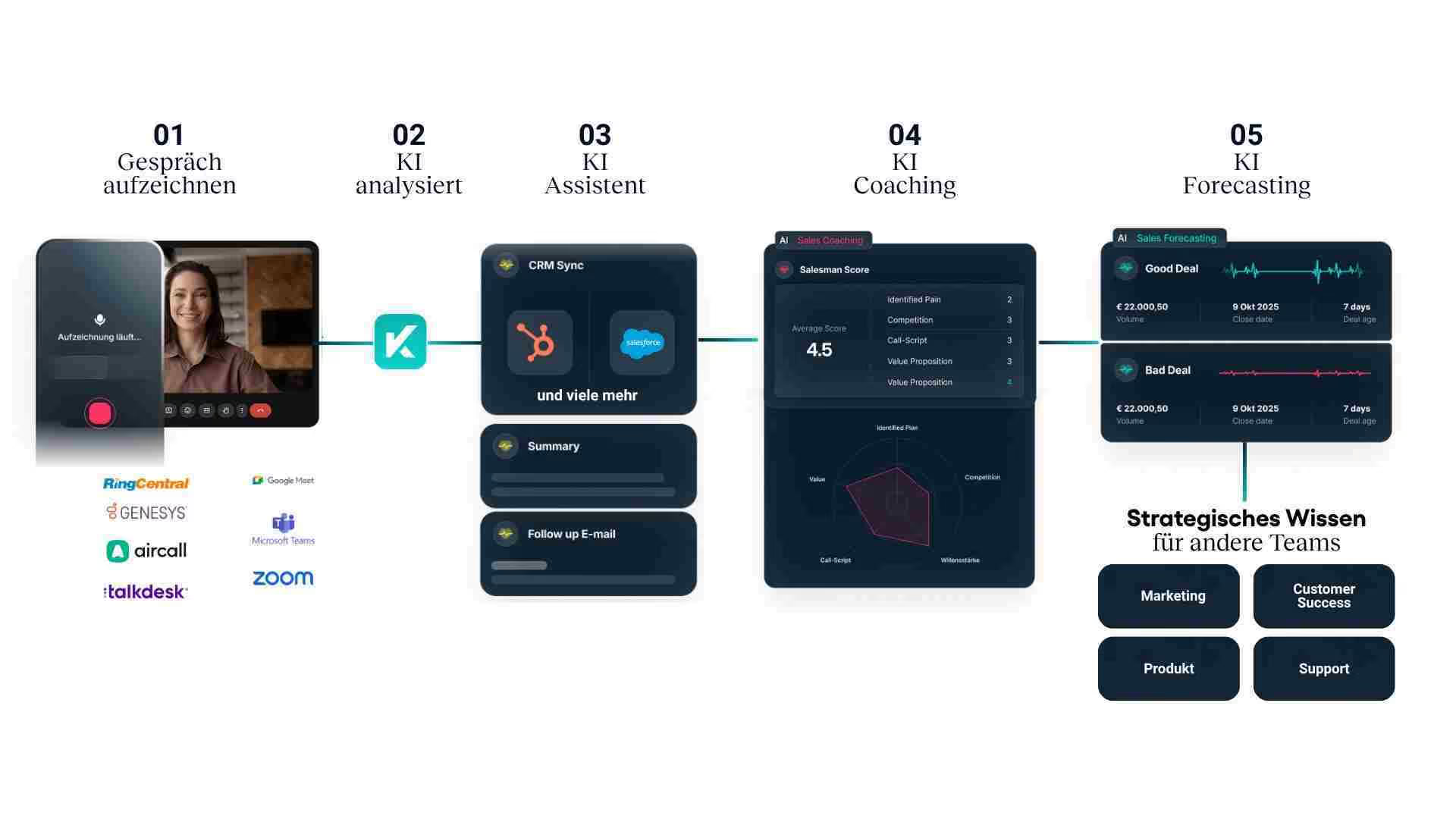
A good sales automation process follows five phases that build on one another. If you skip a phase, you end up with isolated workflows instead of a cohesive system.
What tasks does AI handle in sales automation?
In 2026, AI is transforming sales automation in three stages:
- Generative AI: writes content such as follow-up emails and call summaries.
- Predictive AI: estimates closing probabilities and risks based on pipeline data.
- Autonomous AI: executes actions independently, such as CRM updates or sending risk alerts to the sales manager.
Today, AI can recognize speech patterns, pain points, and risk flags. However, quality depends heavily on language, dialect, data basis, and the model used. AI often struggles with dialects, multilingual sales cycles, and cultural sales logic. A model trained in the US may be less effective at recognizing Swiss German or Austrian German than a European model trained on DACH data.
Two AI layers are emerging as key drivers in 2026:
- Conversation Intelligence: analyzes individual conversations and provides insights per call.
- Revenue Intelligence: aggregates data across the entire pipeline to provide forecasts, coaching, and market reports at the team level.
Both are essential building blocks in 2026 for a sales automation architecture that goes beyond mere workflow tooling.
What legal aspects should you consider regarding sales automation?
In 2026, sales automation touches on four key GDPR articles:
- Art. 6: Legal basis for processing.
- Art. 13: Duty to inform data subjects.
- Art. 32: Technical and organizational security.
- Art. 35: Data protection impact assessment for high-risk processing.
Every call recording requires a clear legal basis. For external contacts, you must obtain informed consent before recording begins and document it in a verifiable manner.
The EU AI Act has been impacting tool selection in stages since 2025. Automatic categorization, employee evaluation, and contact profiling can trigger additional transparency and documentation requirements. The EU Data Act facilitates switching tools and reduces vendor lock-in.
In 2026, the hosting location is a critical evaluation criterion. US providers can be compelled to disclose data under the Cloud Act, even if stored on EU servers. EU hosting and ISO 27001 certifications structurally reduce this risk.
EU hosting vs. US hosting compared
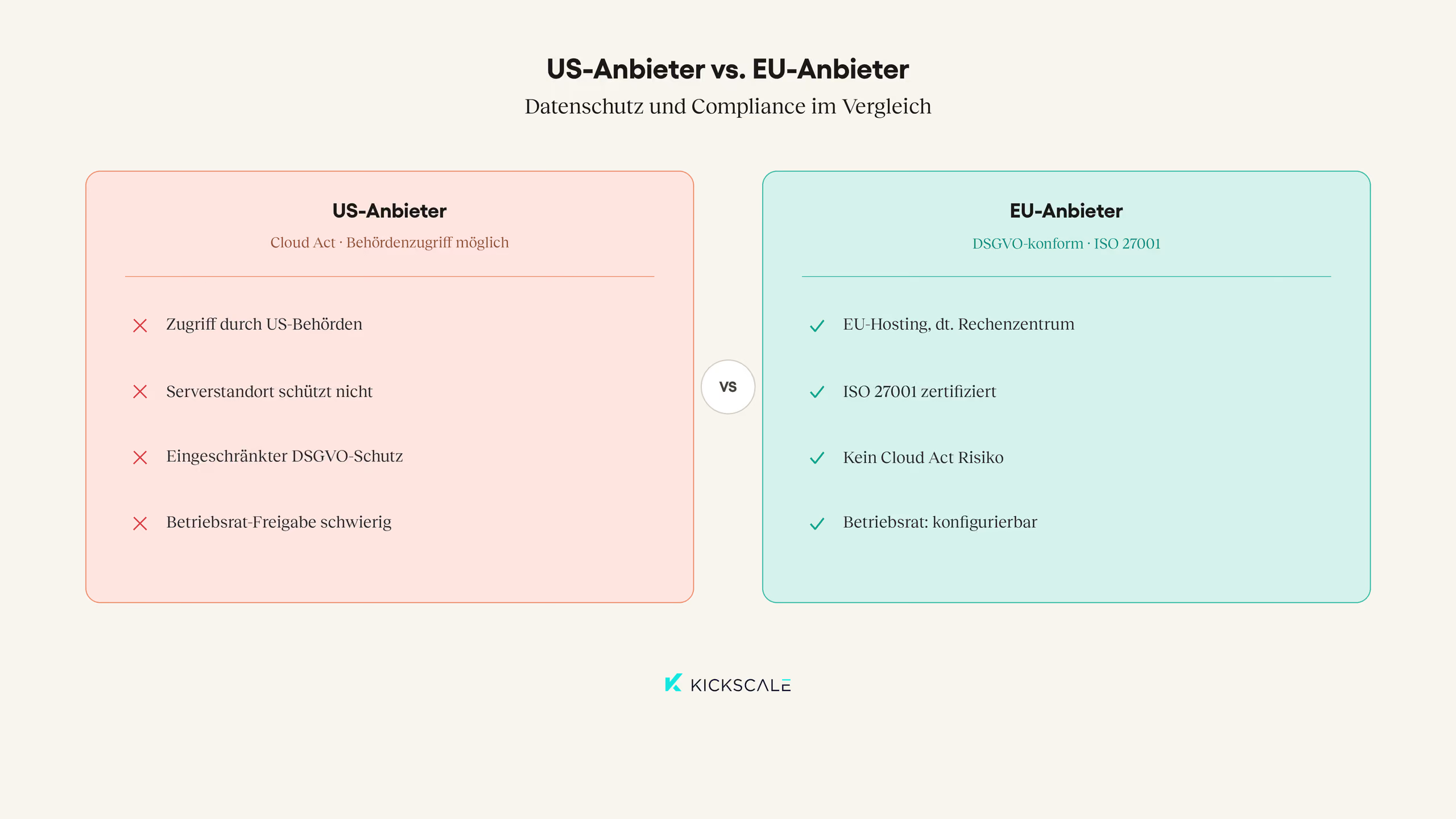
Kickscale is hosted exclusively on German servers and is ISO 27001 certified. These credentials can streamline security and legal reviews for European companies.
How do you anchor CRM sales automation in your tech stack?
CRM sales automation succeeds or fails based on the depth of integration between the automation platform and the CRM. The CRM remains the central data source. Workflow layers built on top only provide value if synchronization is bidirectional, clean, and real-time.
Three integration patterns are becoming standard in 2026:
- Native integration: the most robust option via official app marketplaces, where the provider handles CRM API updates themselves.
- API integration: greater depth via REST or GraphQL, though it requires internal engineering.
- Middleware: for specific connections; it quickly reaches its limits with complex sales processes.
Bidirectional means that notes, activities, contact fields, and deal stages flow in both directions. If a sales rep moves a deal to a new stage in the CRM, the platform adopts this information. If the platform detects a risk flag, it is saved as a custom property in the deal record.
Three typical sources of error:
- Duplicates: poor matching rules between the platform and CRM.
- Blocked workflows: missing mandatory fields in the CRM.
- Reporting blind spots: data exists in the automation platform but does not flow back into the CRM.
A clean setup defines which system owns which field before the rollout.
What should you look for when choosing a sales automation platform?
Seven hard criteria will determine the suitability of a sales automation platform for European B2B sales teams in 2026.
- Hosting region: EU hosting with a German or European data center can reduce CLOUD Act and third-country transfer risks.
- Certifications: ISO 27001 or SOC 2 Type II as essential security credentials for compliance departments.
- Deep CRM integration: native, bidirectional sync including custom fields, activities, and workflow triggers.
- AI maturity: conversation intelligence, forecasting, and coaching based on proprietary training data versus mere wrappers around public LLM APIs.
- Language and dialect comprehension: Swiss German, Austrian, and specific accents may be recognized with varying degrees of accuracy depending on the model and training data.
- Works council compatibility: configurable anonymization, granular permissions, and audit logs.
- Data portability: full export of all raw data in a machine-readable format in accordance with the EU Data Act.
Three soft criteria only become apparent during actual use:
- Time-to-Value measures how quickly the platform delivers results
- Onboarding effort shows how much internal change management is required
- Roadmap transparency answers whether you are building on a platform that will still fit your sales strategy in two years
Which tool stack is the right fit depends on the size and maturity of your sales team. Sales teams with five reps often do well with a CRM plus a sales engagement component. Teams with 20 reps need to add conversation intelligence. From 50 reps upwards, a full-fledged revenue intelligence software can improve forecast accuracy and support reporting requirements for investors or the board.
How do you implement sales automation in your company?
Six steps lead to a robust sales automation implementation.
The most common pitfalls are unclear responsibilities between sales and sales ops, lack of rep training, too broad a scope in the first phase, lack of acceptance by the works council, and a rollout before CRM hygiene is finalized.
What ROI does sales automation provide?
Sales automation shifts time from administration to selling. According to a Salesforce study, sales reps today spend an average of 40 percent of their working time actively selling. Older benchmarks were around 28 percent. The gap shows how much sales capacity can be reclaimed through better automation and cleaner processes.
A sample calculation makes the effect visible:
Qualitative effects count just as much. Forecast accuracy can increase because pipeline data is less reliant on gut feeling. Onboarding time for new reps can be reduced when top-performer calls are available as a best-practice library. Win rates can improve when risks in deals become visible early on.
This is how your sales operation runs when reps no longer have to type
Kickscale handles meeting documentation and CRM maintenance automatically. Your reps finish a call and move straight to the next one. No follow-up work or lost information. Your sales leadership sees deal risks, forecasts, and coaching insights based on actual customer conversations.
Your benefits with Kickscale:
- No more manual typing: Kickscale automatically transfers notes, fields, activities, and tasks from every conversation into the CRM. Your reps focus on selling.
- Forecasts based on real conversation data: Deal health and closing probability are based on what customers actually said, not on estimates from the last pipeline review.
- Reduced third-country transfer risk compared to US setups: Kickscale runs on German servers, is ISO 27001 certified, and can be configured to meet the requirements of European works councils.
- Reps learn from real calls: Kickscale shows what top performers do differently and provides every rep with concrete coaching insights from their own conversations.
Sales Automation – Frequently Asked Questions
What is the difference between sales automation and CRM automation?

CRM automation covers workflows within a single CRM system, such as stage updates or task assignments. Sales automation is broader in scope, bundling CRM workflows with sales engagement, conversation intelligence, and revenue intelligence into one cohesive process.
This is some text inside of a div block.
Is sales automation worth it for small sales teams with fewer than ten reps?
Yes, often disproportionately so. Small teams have less staff for manual CRM maintenance and gain more per rep through automatic meeting documentation and sales engagement sequences.
This is some text inside of a div block.
Which sales automation tools are GDPR-compliant and EU-hosted?
Platforms with EU hosting, ISO 27001 certification, and a complete list of sub-processors meet the key requirements of many GDPR audits. US providers without clear data sovereignty, appropriate transfer mechanisms, and transparent sub-processors can trigger additional scrutiny in DACH compliance reviews.
This is some text inside of a div block.
How does the EU AI Act affect sales automation platforms?
The EU AI Act classifies AI features into risk categories based on their use case. Employee evaluation and certain types of profiling can trigger increased transparency, documentation, and risk management obligations. Simple workflow triggers are generally less critical.
This is some text inside of a div block.
How do you measure the success of your sales automation?
Three KPIs provide a reliable assessment. Time per deal measures how quickly sales moves from lead to close. Forecast accuracy shows how reliable pipeline and forecast data are. Win rate indicates whether better processes, coaching, and insights are boosting your closing rate.
This is some text inside of a div block.
Do you need a dedicated IT department for sales automation?
Not necessarily, if you choose platforms with native CRM integrations. Native connectors can significantly reduce implementation effort, depending on CRM complexity, data models, permissions, and compliance checks.
This is some text inside of a div block.
When is sales automation counterproductive?
During discovery calls, negotiation phases, and escalations. These moments determine trust and margins. Automated emails cannot replace genuine relationship building in these instances.
This is some text inside of a div block.
Markus is the co-founder and CMO of the Vienna-based scaleup Kickscale, which develops AI-powered revenue intelligence technology for European sales teams. Before founding Kickscale, Markus started as one of the first SDRs at Bitmovin and rose to become Head of Global Digital Marketing, where he played a key role in establishing the video streaming company as a global market leader.




Your sales team deserves clarity instead of guessing games
With our AI revenue intelligence platform, we help innovative sales teams make better decisions and close more deals.
Data-driven better pipeline decisions.
Latest articles for sales leaders who want to improve the quality of their CRM data, forecasts, and revenue operations.


Your sales team deserves clarity instead of guessing games
With our AI revenue intelligence platform, we help innovative sales teams make better decisions and close more deals. Experience the difference:

Deep customer understanding
Identify why customers buy or what prevents them from doing so – from all conversations

Objective forecasts
Finally make decisions based on hard facts instead of gut feeling

Deal prioritization
Focus your team on the opportunities with the highest potential