Sales Analytics Software: 7 Tools Compared for B2B Sales Teams

Sales analytics software has become a staple in the tech stacks of many B2B sales teams. Offerings range from simple reporting dashboards to AI-powered platforms that analyze conversation content, objectively evaluate deals, and automatically calculate forecasts. If you are looking for the right sales analytics software for your team in the DACH market, you will find seven providers compared here.
How do I choose sales analytics software?
When selecting software for sales analytics, it comes down to the depth of data analysis the platform achieves and the extent to which it derives structured, actionable recommendations for the ongoing sales process. Depending on their focus, platforms differ significantly, especially in terms of conversation intelligence, CRM automation, and the quality of the sales forecast.
The following 8 criteria will help with your evaluation:
- CRM integration:Does the platform write structured data back into the CRM bidirectionally, including automatic field updates without manual effort from sales reps?
- Conversation intelligence:Does the tool analyze conversation content such as objections, pain points, and buying signals, or is it limited to metadata like call duration and talk-to-listen ratios?
- Deal health scoring:On what basis does the system calculate close probabilities? Is it rule-based or AI-driven based on actual conversation content?
- Forecast accuracy:Are objective signals such as stakeholder engagement, communication frequency, and qualification status incorporated into the forecast?
- Pipeline transparency:Does the system automatically identify and flag stagnant deals, missing qualification fields, or inactive opportunities?
- GDPR & server location:Where are conversation and customer data stored? Is there a data processing agreement in accordance with Article 28 of the GDPR and clear consent management?
- Multilingualism:Does the tool process conversations in German, including regional dialects? For sales teams in the DACH region, this is a key quality indicator.
- Implementation effort:How long does integration with existing CRM and meeting tools take? Is there a structured onboarding process that doesn't require a full IT project?
7 Sales Analytics Software Platforms Compared
Kickscale
Kickscale is a European revenue intelligence software based in Austria. The platform is aimed at B2B sales teams in the DACH region and combines an AI-powered sales notetaker, conversation intelligence, and CRM automation on a shared data foundation. All customer data is hosted exclusively on servers in Germany.
-
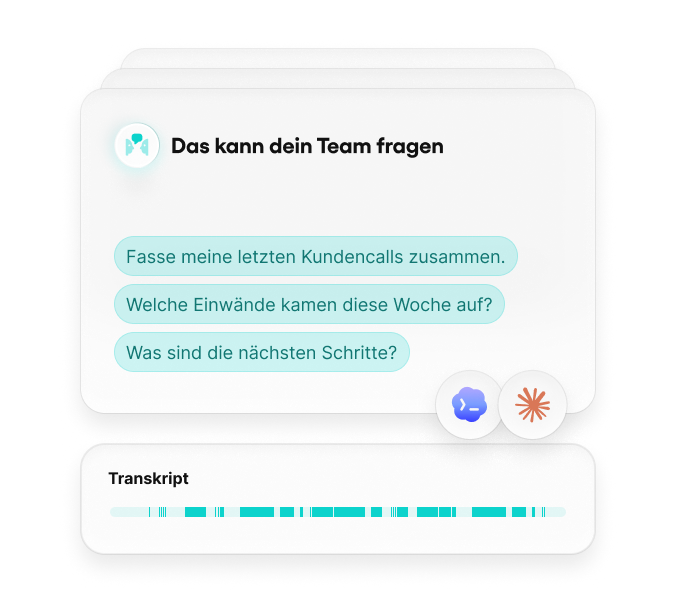
Conversation intelligence: Kickscale analyzes objections, pain points, and conversation dynamics from real customer conversations and makes this information available in a structured way to the entire sales team.
-
Automated CRM population: Conversation data from Microsoft Teams, Google Meet, Zoom, and telephony flows automatically into CRM fields in HubSpot, Salesforce, or Pipedrive, without manual entry by sales reps.
-
Deal health scoring: Deals are automatically scored based on objective signals from conversations. Missing qualification fields are flagged directly in the CRM.
-
Deal prioritization: Ranking of opportunities based on objective signals from conversations, not on the subjective assessments of individual account executives.
-
Sales forecasting: AI-powered revenue forecasts based on conversation content, stakeholder engagement, and qualification status, not on manual rep estimates.
-
GDPR & hosting: Server location exclusively in Germany, ISO 27001 certified, no AI training with customer data.
.avif)
Assistant & Coach: €49 per user/month, no seat minimum – call recording, AI coaching, and CRM integration.
Revenue Intelligence: €89 per user/month, from 10 seats – plus forecasting, deal intelligence, and pipeline visibility.
Enterprise: Price on request, from 30 seats – custom AI agents, custom integrations, and a dedicated Customer Success Manager.
You can try 50 meetings for free – no credit card and no sales interaction required.
2 Gong
Gong is a US-based provider in the revenue intelligence space and is considered the market leader in this category. The platform combines conversation analysis, email data, and CRM information to identify patterns in sales processes.
- Revenue Intelligence: Consolidating data from sales, marketing, and customer success into a single view.
- Conversation Analysis: Analyzing calls, web conferences, and emails with automatic detection of objections, competitor mentions, and buying signals.
- Forecast Rollup: Aggregating revenue forecasts across team, regional, and company levels.
- Integrations: Connections to common CRM, meeting, and sales engagement tools.
Gong Pricing(As of May 2026)
Gong does not publish fixed list prices. The pricing model consists of a user-based license fee plus an additional platform fee. Prices are available upon request only.
Note for the DACH market:Gong is a US provider with extensive security and compliance certifications. Before implementation, sales teams should individually assess which data residency, sub-processors, third-country transfers, and contractual data protection mechanisms apply to their specific use case.
3 Qymatix
Qymatix is a German AI company focused on predictive sales analytics for the B2B sector. The platform is aimed at companies in the wholesale and manufacturing industries within the DACH region and primarily evaluates transaction data from ERP and CRM systems.
- Churn Prevention: The system analyzes historical purchasing patterns to detect early signs of declining customer loyalty.
- Cross-Selling Potential: Based on transaction data, Qymatix identifies product and customer combinations with high upselling potential.
- Pricing Analytics: Price recommendations and pricing analyses to support sales management.
- ERP Integration: Connectivity with common ERP systems to analyze transaction data directly.
Qymatix Pricing(As of May 2026):
Qymatix does not publish list prices on its website. Pricing is available upon request.
4 SAP Sales Cloud
SAP Sales Cloud is a CRM and sales analytics platform within the SAP portfolio, designed for enterprise customers who want to tightly integrate their sales processes with ERP systems. In the DACH market, SAP is a widely established provider with an extensive partner network.
- SAP ERP Integration: Direct connection to SAP S/4HANA and other SAP systems for a consistent data foundation across ERP and CRM.
- Pipeline and Opportunity Management: Management and evaluation of sales opportunities with AI-powered recommendations.
- Sales Analytics & Reporting: Dashboards and reports on pipeline status, forecasting, and sales performance.
- Forecasting: Revenue projections based on CRM data and historical closing patterns.
SAP Sales Cloud Pricing(As of May 2026):
SAP publicly lists a monthly user price as well as optional add-ons, which may vary by country and currency. On the international pricing page, SAP Sales Cloud is listed at $139 per user/month. Service and field sales add-ons are available as optional extras. Contract terms range from 3 to 36 months with auto-renewal. A 30-day free trial is available.
5 Demodesk
Demodesk is a German company focused on meeting intelligence and coaching features for sales teams. The platform positions itself as a GDPR-compliant solution and is aimed at sales teams looking to implement structured coaching and CRM automation based on conversation data.
- Meeting Recording & Transcription: Automatic recording and transcription of video calls.
- Coaching Workflows: Structured feedback for sales reps based on conversation analysis.
- Playbooks: Predefined conversation guides displayed directly to the rep during a live call.
- CRM Sync: Automatic transfer of meeting data into the CRM.
Demodesk pricing(As of May 2026):
Demodesk offers a 14-day free trial with no credit card required:
- Coaching & AI: €49 per user/month, includes meeting recording, AI Assistant, AI Coach, AI Analyst, and AI CRM Concierge.
- AI Crew: Usage-based, free up to 1,000 agent runs/month, then tiered: €299 (5,000 runs), €999 (25,000 runs), Enterprise on request (unlimited). Additional AI compute credits apply.
- Enterprise: Price on request, includes custom agent implementation, onboarding, and priority support.
6 Bliro
Bliro is a German startup with a privacy-first approach: the platform documents meetings in real time without storing audio data. This makes Bliro suitable for sales teams in regulated industries or companies with particularly strict data protection requirements.
- Real-time transcription without audio storage: Bliro transcribes conversations directly without saving the audio file or transmitting it to external servers.
- Automated meeting summaries: Structured summaries provided after the meeting for CRM documentation and follow-ups.
- CRM integration: Syncs meeting notes into common CRM systems.
- GDPR compliant: Servers are located in Germany; with the audio-free option, the consent dialog for meeting participants is not required.
Bliro pricing(As of May 2026):
Bliro offers three plans: Standard, For Customer Teams, and Enterprise. Bliro does not publish specific prices; they are available upon request via a personal consultation.
7 Leadfeeder (formerly Dealfront)
Leadfeeder is a European platform with roots in Finland and Germany that reverted to its original brand name from Dealfront on March 24, 2026. The platform focuses on B2B lead intelligence and website visitor tracking: it identifies companies visiting a website and enriches these signals with company profiles and contact details.
- Website visitor tracking: Leadfeeder identifies companies visiting a website and provides this as a sales signal for the sales team.
- B2B company database: Access to an extensive database of company profiles, key contacts, and contact information, with a focus on European B2B data.
- CRM integration: Transfers identified leads and company data to CRM systems such as HubSpot or Salesforce.
- Data protection: GDPR-compliant processing of B2B data, European data processing, and a data processing agreement for processing operations.
Leadfeeder pricing(As of May 2026):
Leadfeeder offers a 14-day free trial with no credit card required and features 3 plans:
- Lite: €0, 100 companies/month, basic info, 20 contacts.
- Website Visitors: from €99/month, unlimited companies, CRM/Slack, alerts.
- Platform: from €399/month, prospecting, AI enrichment, lead scoring.
Is Kickscale the right sales analytics software for you?
Kickscale is designed for B2B sales teams of about 10 people or more with multi-stage sales processes in the DACH region. The platform is suitable for teams that want to automatically populate CRM data from conversations, objectively evaluate deals, and create forecasts based on real conversation signals.
The scope of services includes hosting in Germany, ISO 27001 certification, and support for German-language conversations, including regional dialects. If you are looking for a structured pipeline management software or a comprehensive revenue operations structure in addition to sales analytics, you will find both on the Kickscale platform.
Sales Analytics Software – Frequently Asked Questions
What is the difference between sales analytics and business intelligence?

Business intelligence typically analyzes company-wide data from ERP, finance, and production systems, often catering to management and specialized departments. Sales analytics focuses on sales data such as conversations, pipeline activities, and deal progression, providing actionable insights directly for sales teams.
This is some text inside of a div block.
What data sources do sales analytics tools use?
Sales analytics tools aggregate data from CRM systems, sales calls, emails, and calendar entries. Depending on the platform, external signals such as stakeholder engagement or historical closing patterns are also incorporated into the analysis.
This is some text inside of a div block.
How does sales analytics improve forecast accuracy?
Traditional forecasts rely on manual rep assessments, which are subjective and often incomplete. Sales analytics tools supplement these with objective signals from actual conversations, allowing deviations to be identified earlier and making forecasts more reliable.
This is some text inside of a div block.
At what team size does sales analytics software become worthwhile?
Sales analytics software reaches its full potential with sales teams of about 5 to 10 people, as this is when enough data is generated to identify reliable patterns. Smaller teams benefit primarily from automatic CRM data entry and reduced administrative workload.
This is some text inside of a div block.
What role does the GDPR play when using sales analytics software?
When sales analytics software records, transcribes, or analyzes customer conversations, strict data protection requirements apply, such as those regarding legal basis, transparency, information obligations, and deletion periods. A data processing agreement pursuant to Article 28 GDPR is required if the provider processes personal data on your behalf.
This is some text inside of a div block.
Can sales analytics software replace a CRM?
Sales analytics software does not replace a CRM; instead, it adds an analysis and automation layer. It improves CRM data quality by automatically structuring conversation content and deriving actionable recommendations from it.
This is some text inside of a div block.
This is some text inside of a div block.
Markus is the co-founder and CMO of the Vienna-based scaleup Kickscale, which develops AI-powered revenue intelligence technology for European sales teams. Before founding Kickscale, Markus started as one of the first SDRs at Bitmovin and rose to become Head of Global Digital Marketing, where he played a key role in establishing the video streaming company as a global market leader.




Your sales team deserves clarity instead of guessing games
With our AI revenue intelligence platform, we help innovative sales teams make better decisions and close more deals.
Data-driven better pipeline decisions.
Latest articles for sales leaders who want to improve the quality of their CRM data, forecasts, and revenue operations.


Your sales team deserves clarity instead of guessing games
With our AI revenue intelligence platform, we help innovative sales teams make better decisions and close more deals. Experience the difference:

Deep customer understanding
Identify why customers buy or what prevents them from doing so – from all conversations

Objective forecasts
Finally make decisions based on hard facts instead of gut feeling

Deal prioritization
Focus your team on the opportunities with the highest potential